
Race Nutrition in Triathlon
Part 1 Nutrition before the Race
In this article, you will learn the most important nutrition tips for your triathlon races!
Triathlon, which integrates the three endurance disciplines of swimming, cycling, and running, places unique physiological and nutritional demands on athletes. With competition durations spanning from approximately 50 minutes in sprint-distance events to over 14 hours in Ironman races, developing effective, evidence-based nutrition strategies presents a complex challenge for both athletes and practitioners.
Irrespective of race distance, dehydration, depletion of carbohydrate stores, and gastrointestinal disturbances represent the primary nutrition-related factors limiting performance in triathlon, often determining overall success or failure (1,2,3).
That’s why race-day nutrition needs to be both targeted and well-tested in advance, taking each of these factors— and individual responses — into account.
Nutrition in the Days before the Competition
Carb Loading
Often summed up by the phrase “eat pasta to run faster,” the traditional approach involves increasing carbohydrate intake while reducing training volume in the days leading up to competition. This strategy aims to maximise muscle glycogen stores—a process known as supercompensation—and, in turn, support improved endurance performance.
- But what does that actually look like?
- What are the physiological demands?
- When is it useful to use?
Carbohydrates are the body’s preferred fuel source during endurance exercise, as they can be converted into usable energy more rapidly and efficiently than fats. During higher-intensity efforts, muscle glycogen stores can become substantially depleted within approximately 75–90 minutes (4). While carbohydrates consumed during exercise can help maintain blood glucose levels, accessing energy directly from stored muscle glycogen is more efficient. For this reason, a key goal of nutritional strategies is to maximise glycogen availability and delay its depletion—helping to sustain performance for longer.
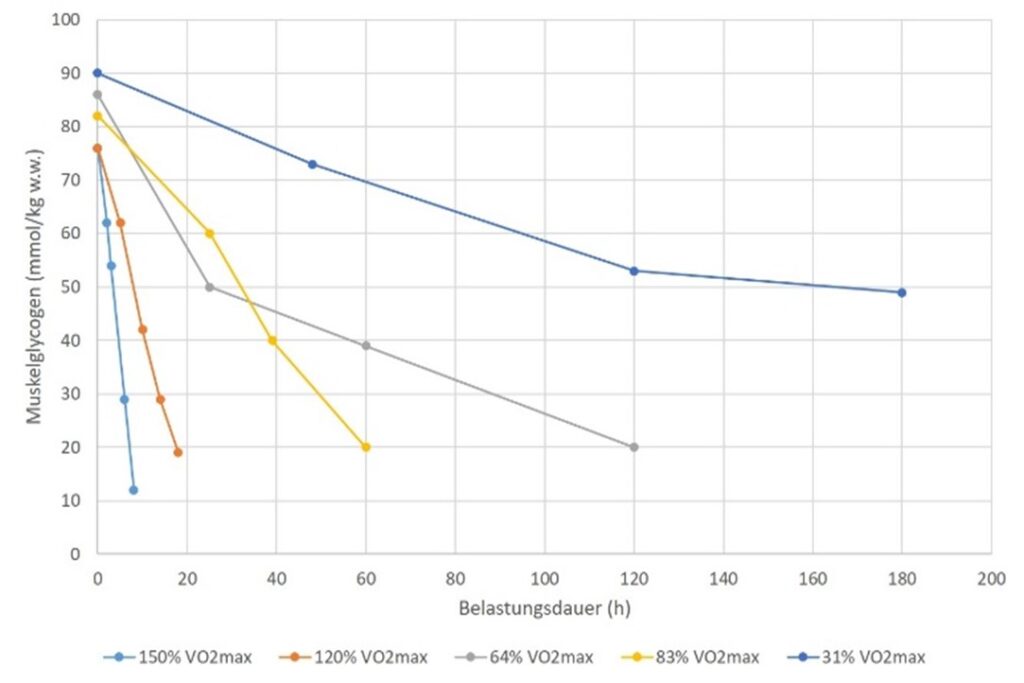
Influence of duration and intensity exercise on glycogen levels (4)
Carbohydrates are stored in the liver & muscles in the form of glycogen:
- Liver (approx. 100g): Serves to regulate blood sugar levels.
- Muscles (300-500g): Preferred fuel to generate energy during exercise
Think of your glycogen stores as your fuel tank before a long journey. Before setting off, you want that tank as full as possible. The more fuel you start with, the longer you can go before needing to refuel—and the better your chances of maintaining pace all the way to the finish.
How is a Supercompensation of Glycogen Stores Achieved?
For a long time, it was thought that glycogen stores first had to be deliberately depleted—typically through a combination of intense endurance training and a low-carbohydrate diet—before they could be maximised. Early research on this approach, often referred to as the “Saltin diet,” showed that it could elevate glycogen stores above normal resting levels, a phenomenon known as supercompensation (5). However, this strategy is highly demanding and often leaves athletes feeling severely fatigued, irritable, and struggling with poor sleep—hardly ideal in the crucial days leading up to competition.
This is why the findings of Bussau and colleagues (2001) were so well received. Their research showed that, in trained endurance athletes, deliberately depleting glycogen stores is not necessary to achieve supercompensation.
Instead, simply increasing carbohydrate intake by around 20–25% for 1.5 to 3 days—combined with a reduction in training volume (known as a “taper”)—can elevate glycogen stores to similar levels as the traditional “Saltin diet,” without the associated fatigue and stress(6).
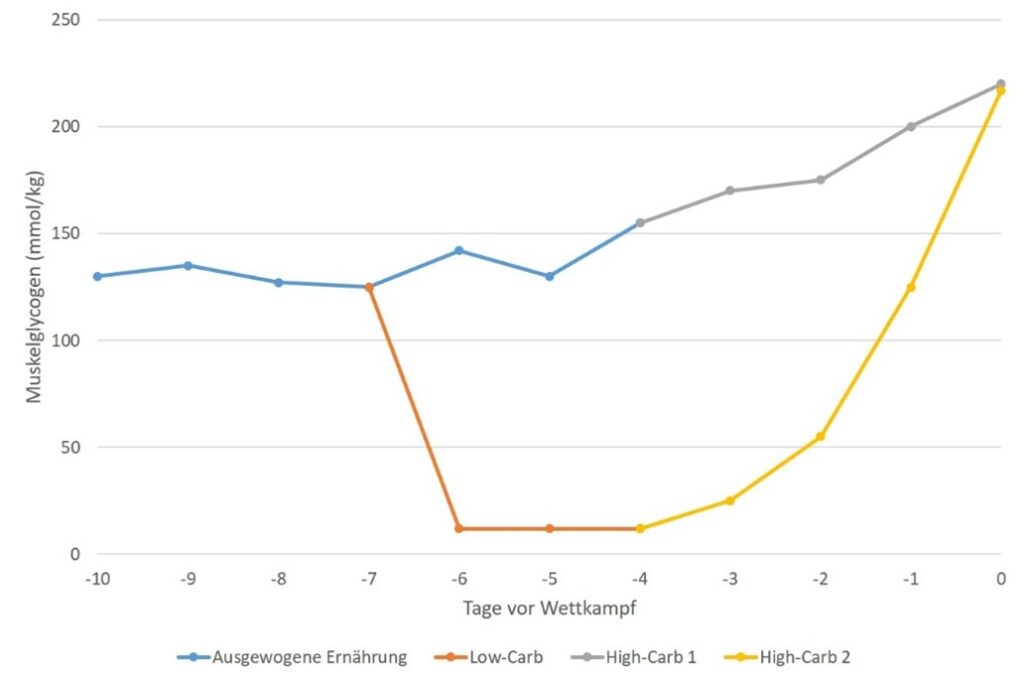
Supercompensation of glycogen stores: with and without low-carb (6)
Nowadays, the approach is much simpler and more practical: increase your carbohydrate intake by around 20% in the 2–3 days before the race while reducing your training volume. This strategy achieves almost the same glycogen-loading effect as older methods—just without the unnecessary strain, making it far more manageable in the lead-up to competition.
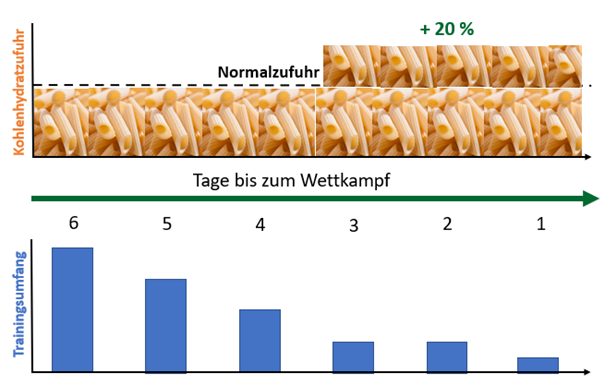
Who Should Consider Carbohydrate Loading?
Carbohydrate loading is most relevant for athletes aiming to maximise performance in endurance events lasting longer than 90 minutes. However, there are a few important considerations. Simply eating larger amounts of your usual carbohydrate sources can quickly become a challenge for the gastrointestinal system, especially in the days leading up to competition.
With that in mind, the following tips and considerations can help you implement carbohydrate loading more effectively:
Track your carbohydrate intake with an app or create a nutrition plan
- Many athletes overestimate how many carbohydrates they actually consume and often end up reaching only about half of the recommended intake. Relying solely on feelings of fullness can be misleading, as the body will signal you to stop eating long before optimal carbohydrate targets are met.
Have a plan that is individually tailored to you
- Different performance levels come with different training demands, and nutrition strategies should be adjusted accordingly
- Each body responds differently to increased carbohydrate intake, so individual tolerance is important to consider. In some cases, a sensitive stomach or digestive issues may need to be taken into account when planning your approach.
- Every athlete has a different everyday life, and accordingly individual solutions are needed in practice
Low in fiber, low in fat & moderate in protein
- Pay attention to low-fiber and easily digestible foods
- This reduces the likelihood of avoiding gastrointestinal discomfort
- It is also easier to consume such a high amount of carbohydrates, because these foods are less filling
- As a rule of thumb: consume between 10 and 20g of fiber per day during the carb loading phase
Example of fiber reduction:
- Wholemeal bread > White bread
- Oatmeal > Crunchy muesli
- Nuts and seeds only in small quantities
- Rice instead of potatoes
- Juice instead of large amounts of fruit
- Reduce the amount of vegetables to 100 to 150g
To avoid excessively increasing total calorie intake, it’s important to slightly reduce fat and protein while increasing carbohydrates. For example, 600 g of carbohydrates already provide around 2400 kcal. Focusing on lean protein sources can help keep overall energy intake in check.
In addition, it can be useful to temporarily reduce high-fibre foods—such as large amounts of fruits, vegetables, legumes, and whole grains—as these can increase feelings of fullness and may contribute to gastrointestinal discomfort during this phase.
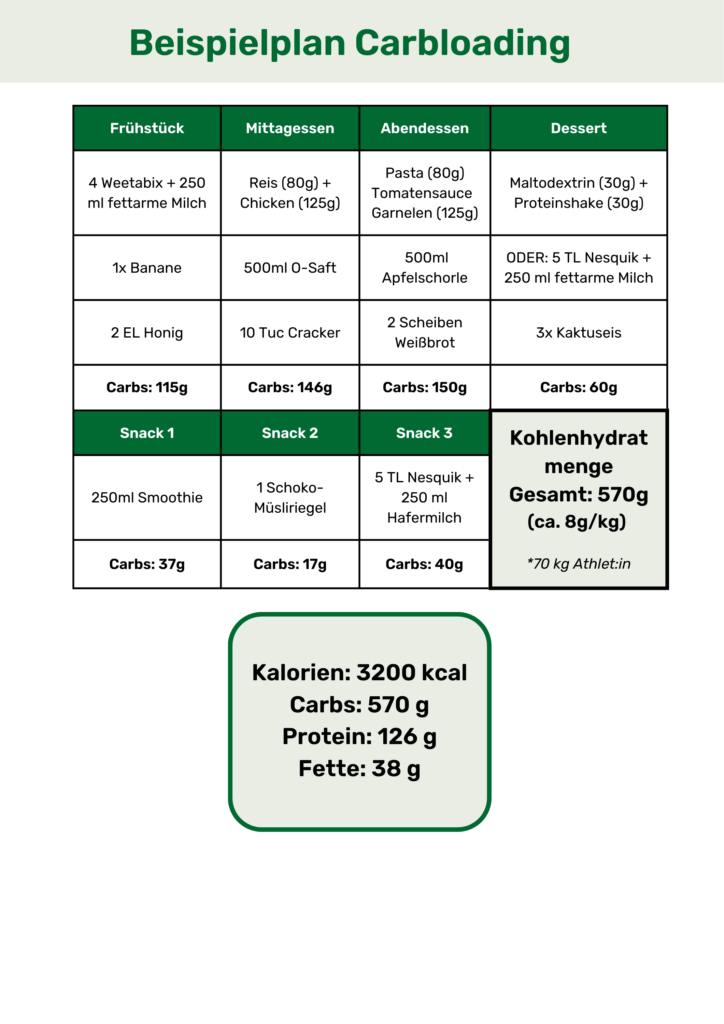
In the example below, we show how these strategies can be put into practice in a simple daily plan.
A less suitable dinner choice would be something like pizza. While it does provide some carbohydrates, it is also high in fat and protein, which increases overall calorie intake and can make it harder to prioritise carbohydrates effectively.
Don’t be afraid of products with a high sugar content and sport drinks, they can make your life easier in this case!
Nutrition on Race Day
How do you deal with Nervousness and Digestive Issues?
A certain level of nervousness before competition is completely normal. However, if you tend to feel particularly anxious, it may be worth reducing or even avoiding caffeine. Digestive issues often go hand in hand with pre-race nerves, and the stimulating effects of caffeine can amplify both anxiety and gastrointestinal discomfort—potentially increasing the risk of problems on race day.
These tips will help you reduce the risk of digestive problems on the day of the competition:
- Avoid experimenting on race day — stick to foods you know you tolerate well.
- Consume little fiber & fats
- Large amounts of fructose can also trigger stomach issues
- Certain foods with a high proportion of fermented carbohydrates (FODMAP content) can cause digestive issues
- Make sure you drink enough fluids
- Avoid painkillers such as Ibuprofen
- Plan your food in advance and prepare it the day before and check what is available at the competition venue
- Allow enough time for digestion before the start!
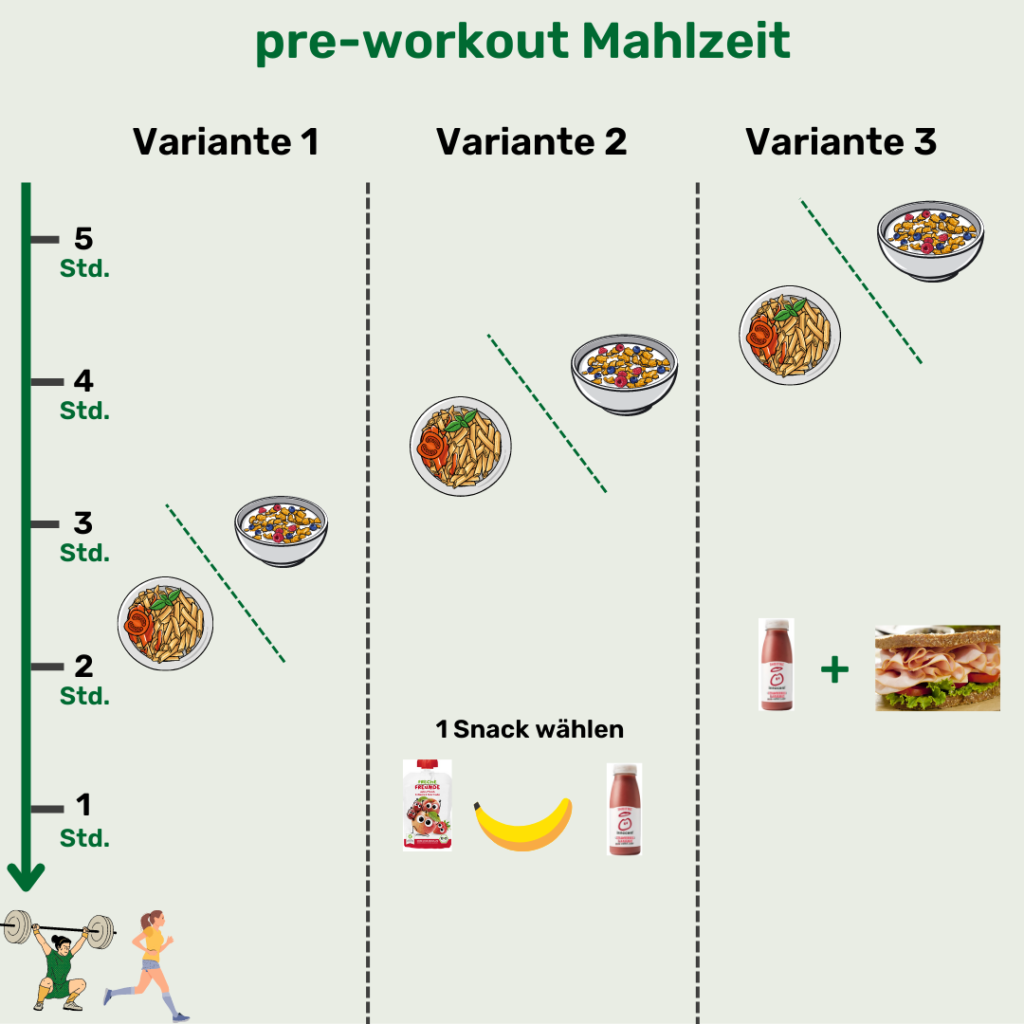
3-4 Hours before the Race
Depending on the start time, the last larger meal should be consumed around 3–4 hours before the race. This meal should be high in carbohydrates (approximately 100–250 g), low in fibre and fat, and contain a moderate amount of protein.
This carbohydrate-rich meal not only provides a final “top-up” of muscle glycogen stores, but also helps replenish liver glycogen, which is largely depleted overnight. Maintaining adequate liver glycogen is important for stabilising blood glucose levels and ensuring a consistent energy supply to the central nervous system.
(7).
<60 Minutes before the Competition
If there is a longer gap between your last main meal and the start, it can be helpful to include a small, easily digestible carbohydrate snack closer to race time. Suitable options include a ripe banana, a large handful of raisins or cranberries, three rice cakes with honey, an energy gel, or around 250–300 ml of a sports drink.
This can also be a good time to consume your first dose of caffeine (approximately 2–3 mg per kg of body weight), if you plan to use it as part of your race strategy.
If the race starts very early, it’s not always practical to eat a full meal 3–4 hours beforehand. In this case, a larger snack made up of easily digestible, carbohydrate-rich foods—ideally including some liquid calories—can be consumed around 2 hours before the start. For example, this could be ~4 slices of toast with jam or honey alongside a glass of juice.
Closer to the start (around 20–30 minutes before), you can then add a final carbohydrate top-up, such as an energy gel or 250–300 ml of a sports drink.
Whichever approach you choose, the most important thing is that you’ve tested it in training under race-like conditions. This is the only way to be confident that your strategy works for you—and that there are no surprises on race day.
Hydration
Another important aspect of nutritional strategies before the start is ensuring optimal hydration.
Starting the race well-hydrated is essential. If you begin in a dehydrated state, it’s very difficult to fully compensate during the race — especially over longer distances.
- Drink 5 – 7ml of fluid per kg of body weight immediately after getting up. Water, tea, juices or sports drinks are the most suitable drinks here (8)
- After that, only small to moderate amounts of fluid are needed to maintain optimal hydration levels throughout the race
- More isn’t always better here—drinking excessively can simply increase the urge to urinate, which is far from ideal in the moments before the start
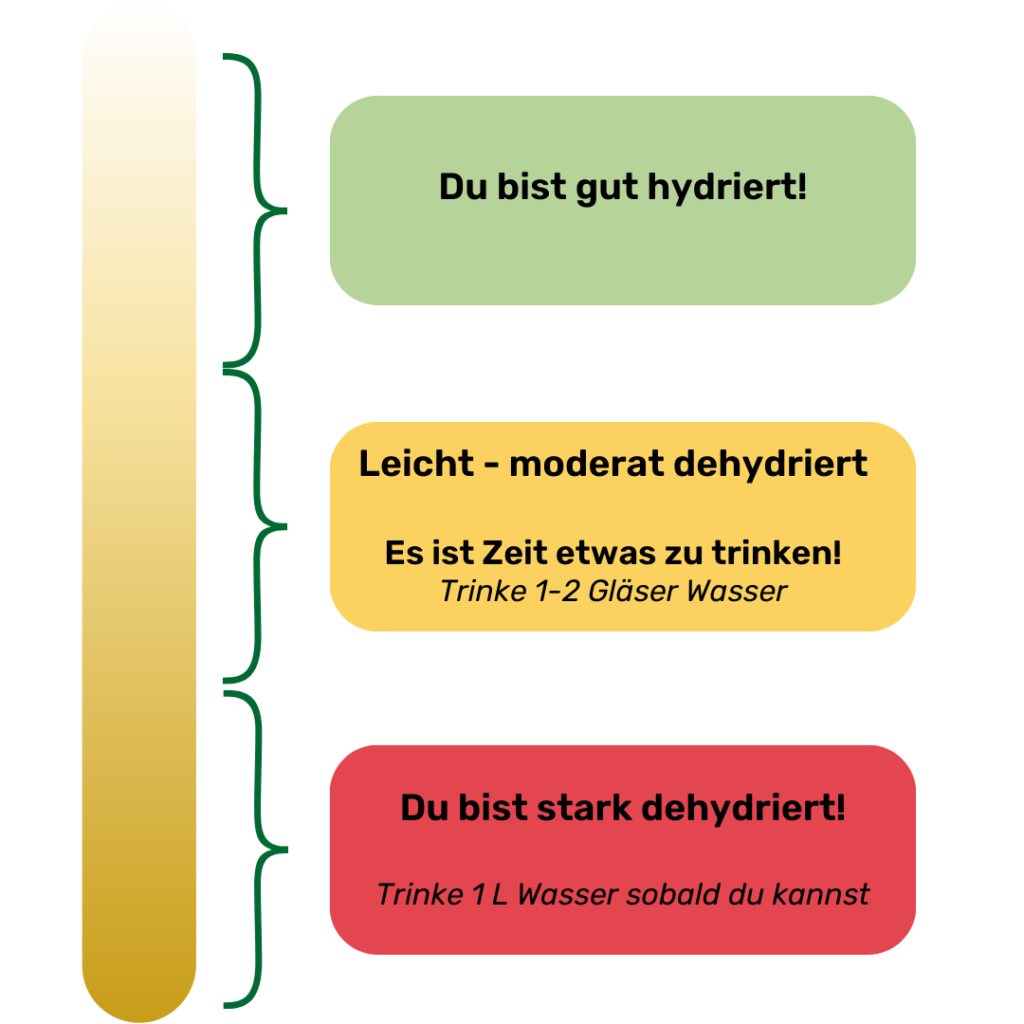
- In the final 1–2 hours before the start, aim to drink only around 200–300 ml, guided by your sense of thirst. Checking the colour of your urine can also be a simple way to assess your hydration status (9, 10)
- If your urine is pale in colour, you’re likely well hydrated and don’t need to drink more. If it appears darker yellow, it’s a good idea to consume an additional 200–300 ml of fluid.
Summary:
- The pre-race period can be broadly divided into two phases: the 3–4 days leading up to the competition, which focus on carbohydrate loading, and the nutrition strategy on the morning of the race itself.
- During carbohydrate loading, it’s important to increase carbohydrate intake by around 20–25% while significantly reducing training volume at the same time
- To minimise feelings of fullness and reduce the risk of gastrointestinal issues, focus on easily digestible carbohydrate sources while keeping fibre and fat intake relatively low
- On the morning of the race, the priority is to ensure adequate carbohydrate and fluid intake, with the exact amounts depending largely on the time available between your first meal and the start
- Above all, the key is to develop an individual strategy and test it in training beforehand.
Wishing you every success in your upcoming races!
Interested in professional nutrition coaching? You can find more information about our services here. We also offer a free introductory call for anyone looking to learn more and see if our coaching is the right fit.