


This is how Caffeine Boosts Sport Performance
One of the main mechanisms through which caffeine improves sports performance is through its effects on adenosine receptors. As more adenosine binds to its receptors, it signals the brain to relax and feel tired. The chemical structure of caffeine is very similar to that of adenosine, which allows caffeine to bind to adenosine receptors and thereby counteract feelings of fatigue and lethargy. Caffeine has also been shown to increase pain tolerance and improve the subjective perception of exhaustion during exercise (1).
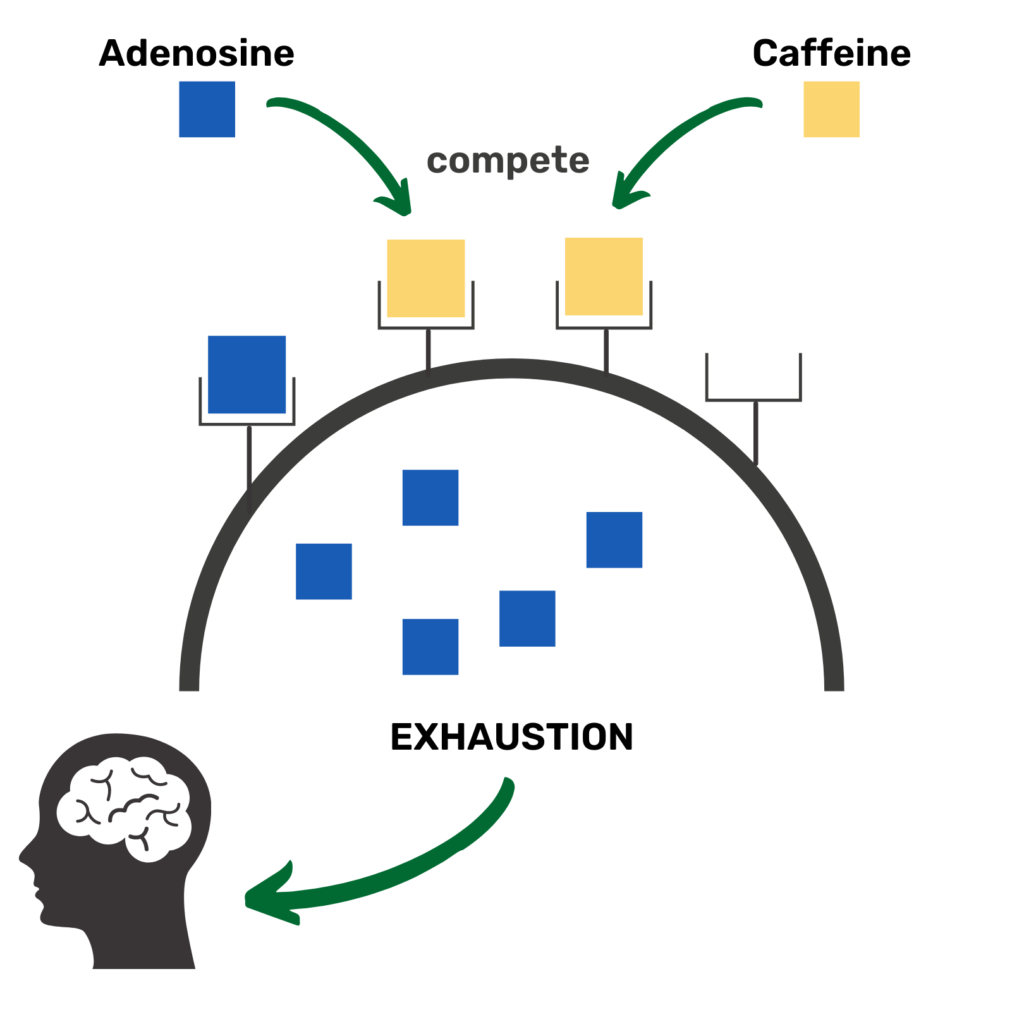
Adenosine and caffeine compete for the same adenosine receptors. The more adenosine molecules pass the brain barrier, the more tired we feel.
Theory of Attenuated Effect of Caffeine by Daily Coffee Consumption
Studies in animals have shown that continuous intake of caffeine results in an increased concentration of adenosine receptor (2). In theory, this would result in a dulled effect of caffeine, meaning you would have to increase your caffeine intake to experience the same performance improvements.
The question is: can this observed effect in animals be transferred to humans, more specifically athletes?
Let us take a closer look.
Performance-Studies with Habitual Coffee Drinkers
Using a very elegant study design, Beaumont et al. (2017) investigated whether daily caffeine intake would dampen its effects (3).
What is so Special about this Study?
This study used a cross-over design, which means that all participants did the initial cycling performance test once with caffeine and once consuming a placebo without knowing the condition. This eliminates the possibility of different caffeine sensitivities affecting the measured outcome. In the second half of the experiment, the participants either consumed a placebo or 3 mg of caffeine per kg bw daily (~ 2 large coffees) for a duration of 3 weeks.
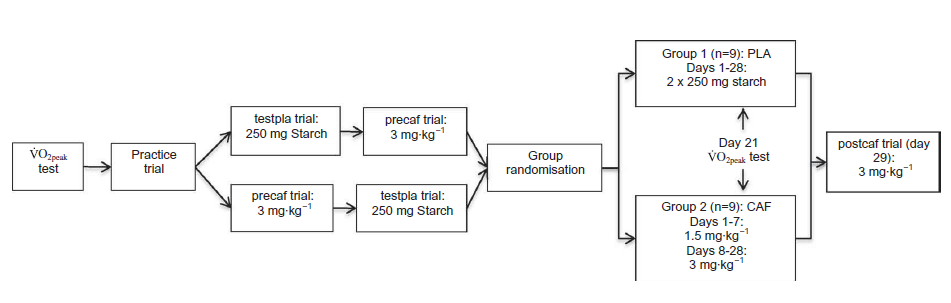
After 3 weeks, the same cycling performance test was repeated with athletes taking an acute caffeine dosage one hour before the workout. If only the placebo group would see an improved performance, this would strongly support the hypothesis that taking caffeine on a daily basis would attenuate its performance-enhancing effects.
The Results?
In the initial performance test, the consumption of caffeine was associated with a significant performance-boosting effect. However, after three weeks, this effect was no longer apparent in the group which consumed caffeine daily, whereas the placebo group was still benefiting from the effect of caffeine just like in the initial cycling test.
So yes, based on this study, the daily consumption of caffeine might attenuate its performance-enhancing effects.
Is this one Study Telling the Whole Story?
While the above-mentioned study suggests that athletes indeed need to cycle their caffeine intake to benefit from its ergogenic properties, multiple studies show that caffeine remains just as effective for athletes who consume coffee daily (4, 5, 6, 7, 8).
However, in most of these studies, athletes were simply allocated into a habitual caffeine-drinking group or into a no-caffeine/low-caffeine group. This means that the athletes were aware of the fact that they were in the experimental group and were somewhat expected to perform better. This bias is well known to influence the performance of participants, which is why researchers try to blind participants.
For example, Gonçalves et al. (5) divided 40 trained cyclists into three groups based on their habitual caffeine intake: low daily intake (average = 58 mg per day), moderate intake (average = 143 mg per day), and high caffeine intake (average = 351 mg per day). In a 30-minute time-trial test, the performance of athletes in all groups was significantly better compared to a placebo group. This indicates that caffeine still had a positive effect on performance in athletes with high daily caffeine consumption.
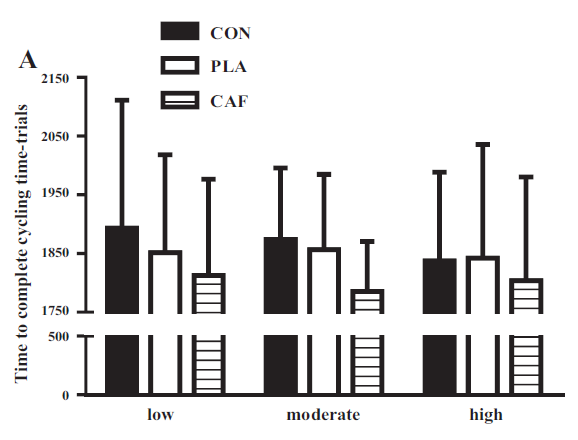
Hence, based on this and the other cited studies (4, 5, 6, 7, 8), daily caffeine consumption does not mean that athletes can no longer benefit from its positive effects on sports performance.
What Does that Mean for the Athlete?
Some suggest that refraining from caffeine for just a few days before competition is the best middle-ground strategy…
Do Athletes Benefit from Short-Term Withdrawal?
The short answer is no: there is no benefit to a 2–4 day caffeine withdrawal. Both studies (9, 10) that tested this hypothesis observed no benefit from this strategy.
How We Use the Data in our Coaching
Currently, we cannot clearly answer the question of a potential habituation effect with YES or NO.
However, we can clearly state that if daily coffee consumption were to attenuate the effect of acute caffeine intake on performance, the dampening effect would be very small. Otherwise, fewer studies (4, 5, 6, 7, 8) would have shown that caffeine can still improve performance in daily coffee drinkers.
We advise our athletes to consume no more than two cups of coffee per day regardless, primarily because of its negative effects on sleep latency and sleep quality (11).
We do not use caffeine with all our athletes, nor do we use it on a daily basis. Instead, we advise taking it only before key training sessions and during competitions. This decision process is customized for every athlete, taking into account their training schedule, competition level, and other factors. For example, we know that some individuals are much more sensitive to caffeine than others. All these aspects must be considered.
Finally, we only hand out recommendations. In the end, we want every athlete to make their own decision for themselves, but we make sure to have presented all available pros and cons beforehand.
Did you enjoy this article? Then why not share it with your friends and fellow athletes and coaches.