



Ist Kaffee gesund oder ungesund?
Das solltest du als Sportler wissen
Coffee has a bad reputation. They say it’s hard on the heart. They say it dehydrates you. They say it’s addictive. Is that really true? As an athlete, you want to know for sure—after all, most of us have a cup of coffee on the table every day, often right before a workout. At the same time, new horror stories about acrylamide, mold, or heart arrhythmias are constantly circulating online. We’ve reviewed the latest research, focusing on the question that really matters to you as an athlete: Where does coffee actually pose a risk, and where is it just a persistent myth? Spoiler: Most of the myths don’t hold up. Only one area remains truly tricky—and you should be aware of it.
What does caffeine do to your body?
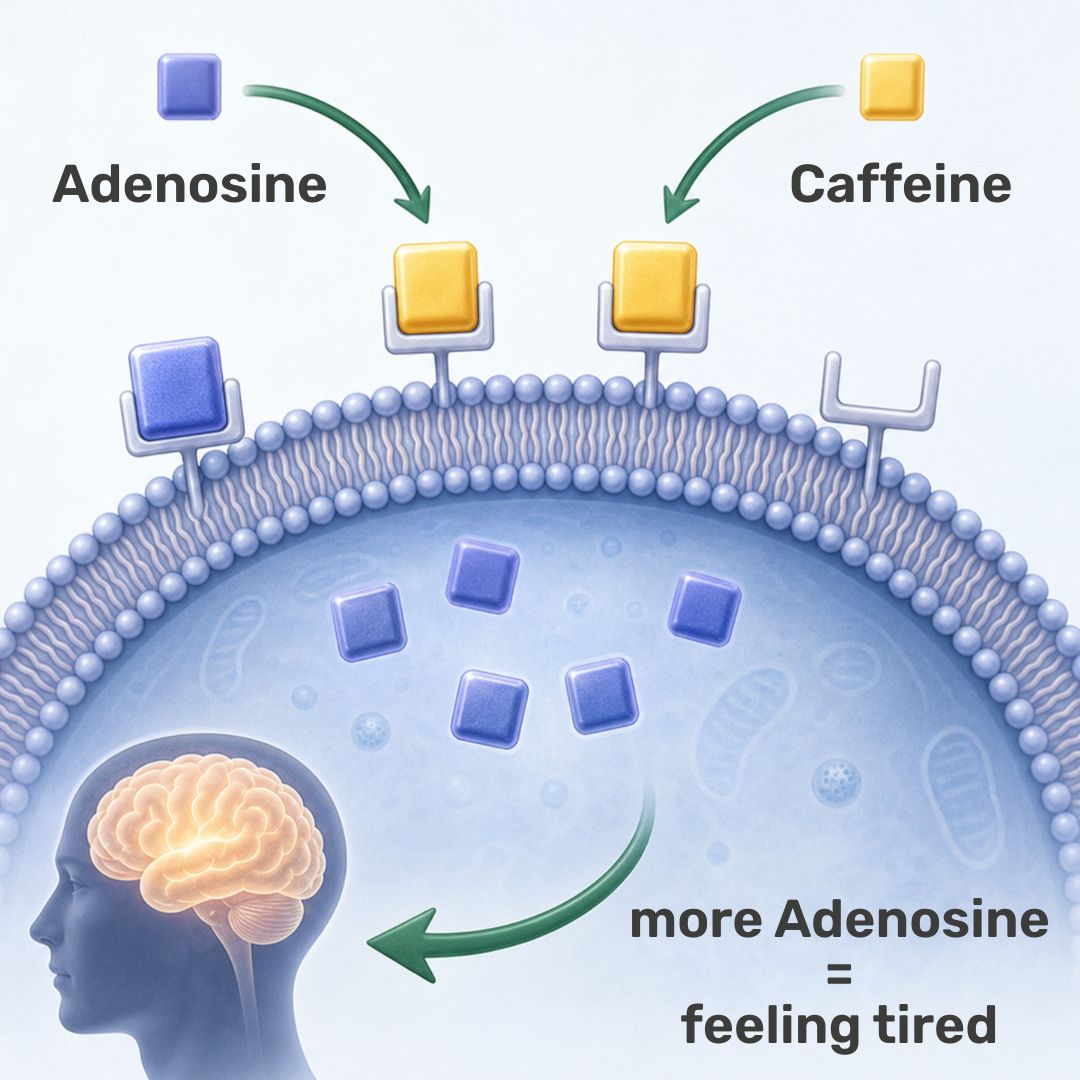
Caffeine is chemically closely related to adenosine. Adenosine builds up in the brain throughout the day and makes you feel tired; it’s essentially the body’s built-in fatigue meter. The higher your adenosine levels, the more tired you feel. Caffeine blocks the adenosine receptors and essentially takes their place. The result: lower adenosine levels, and you feel more alert, even though your actual need for sleep hasn’t changed (1).
More than 95% of caffeine is metabolized by the liver, specifically by the enzyme CYP1A2. This enzyme primarily converts caffeine into the metabolite paraxanthine. The rate at which this occurs varies greatly from person to person, sometimes by a factor of 5 to 6. More on this below in the section on genetics (2).
Einfluss auf die sportliche Leistung
Your brain constantly produces adenosine—the substance that tells you, “Slow down, you’re tired.” Caffeine blocks this very mechanism. It binds to the adenosine receptors (A1/A2A) in the brain and hijacks them before adenosine can even dock. The result: a lower perceived exertion (RPE), greater alertness, and higher levels of dopamine and norepinephrine in your system—your body feels more refreshed than it actually is.
- Stamina: +2–4% in time trials (3)
- Strength: +1–2% improvement in maximum strength (1RM) — Effects are more pronounced during lower-body training than during upper-body training (4)
- Sprint: Peak performance can be improved; the effect of repeated sprints varies from person to person (5)
- Interval Training/Team Sports: Positive Effects on Repeated High-Intensity Efforts, e.g., Greater Jump Height (6)
- Cognition Under Stress: Improved Reaction Time & Tactical Decision-Making (7)
Caffeine is one of the most effective supplements for boosting performance, but does it have negative effects on health?
Is coffee bad for the heart?
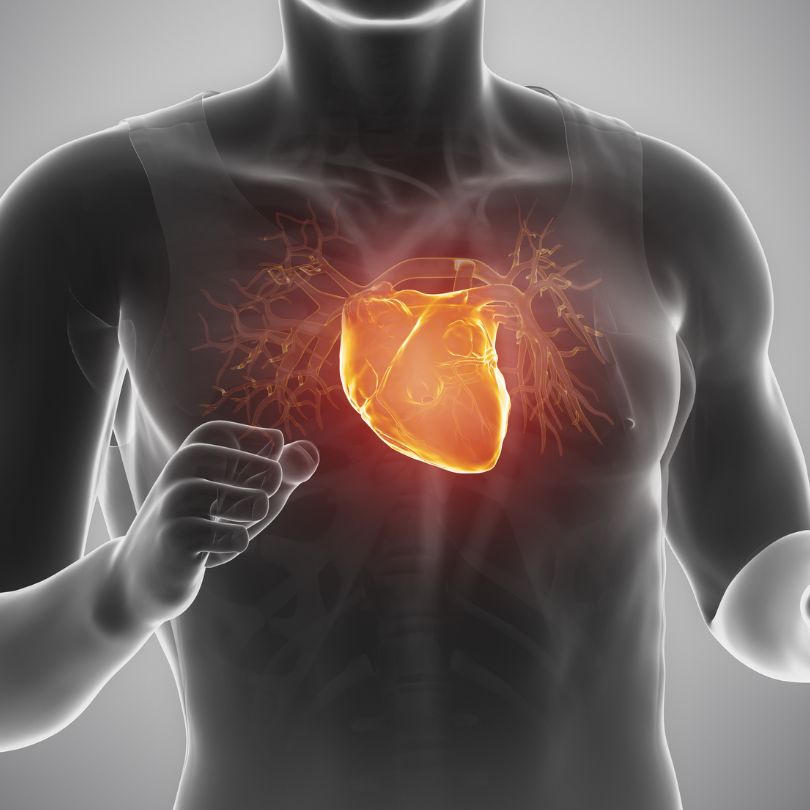
For a long time, the rule of thumb was: Coffee causes heart palpitations, so it’s bad for the heart. That’s exactly what the CRAVE study set out to investigate. For two weeks, 100 healthy adults had their heart rates monitored around the clock, alternating daily between drinking coffee and abstaining from it—in a fair comparison, so everyone had one “coffee day” and one “no-coffee day.” The result: Coffee did not increase the risk of dangerous heart rhythm irregularities. (8).
There is also no increased risk associated with atrial fibrillation. In a large analysis of the UK Biobank involving over 449,000 participants, coffee consumption was even associated with a slightly reduced rate (9).
And what about the arteries themselves? This is where it gets really interesting. Chlorogenic acid, an antioxidant found in coffee, has been shown in controlled studies to improve endothelium-dependent vasodilation (FMD), an important marker of healthy, elastic blood vessels (10).
Cholesterol: It Depends on How It’s Prepared
It’s worth taking a closer look here, because the preparation method makes all the difference (11):
- Espresso ( 3–5 cups/day): slight increase in total cholesterol
- Unfiltered brewed coffee ( e.g., French press, high consumption): more pronounced increase
- Filtered coffee: virtually no effect on cholesterol, LDL, or HDL
Der Grund sind die Diterpene Cafestol und Kahweol. Die bleiben im Papierfilter größtenteils hängen. Trinkst du also viel French Press oder Espresso und hast erhöhte Cholesterinwerte, ist ein Wechsel zu Filterkaffee eine einfache und sinnvolle Veränderung.
High Blood Pressure: Acute, Yes; Long-Term, No
In the short term, caffeine can slightly raise blood pressure, especially if your body isn’t used to it. The effect begins after about 30 minutes and peaks after 1 to 2 hours. With regular consumption, however, a significant tolerance develops. Daily intakes of up to 400 mg do not significantly increase resting blood pressure in the long term, and coffee is not associated with an increased risk of hypertension (12).
Schadstoffe: Mythos oder wirkliches Risiko?
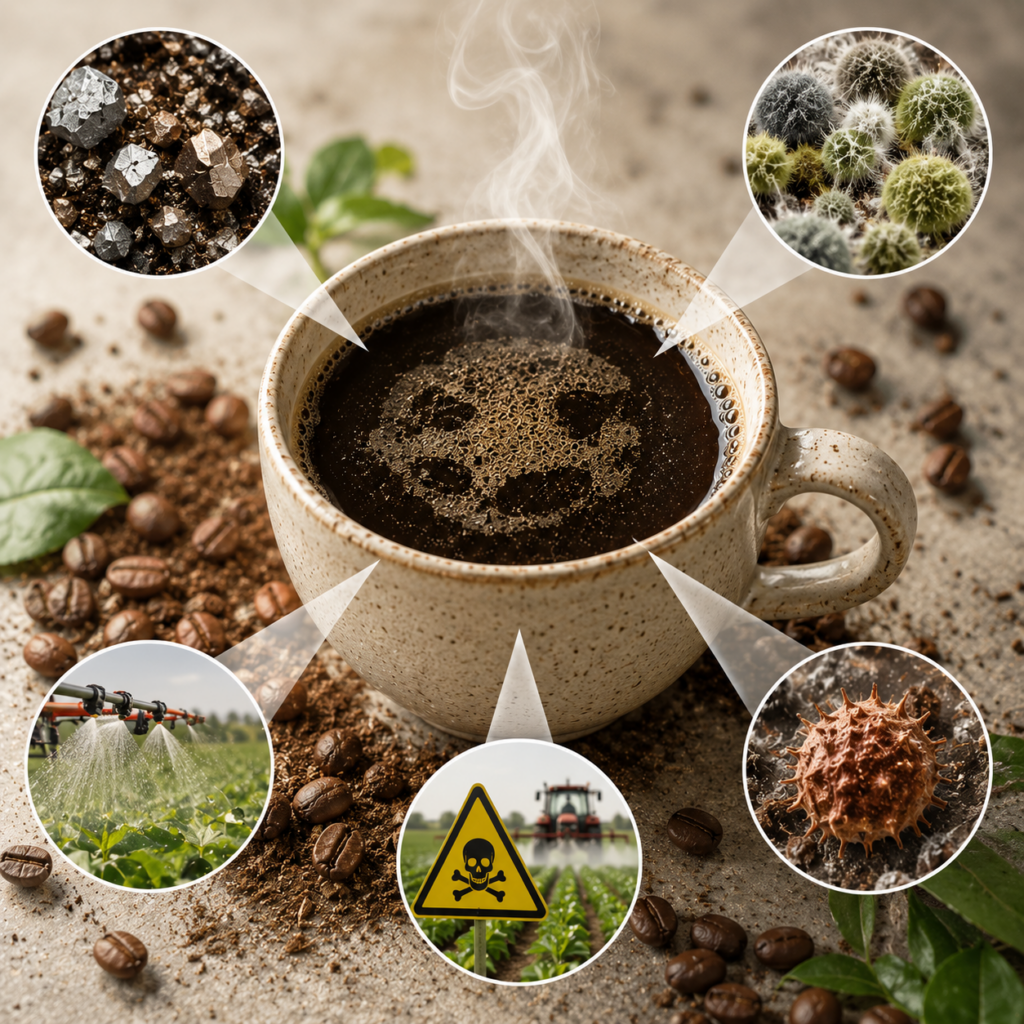
The topic that catches most people’s attention. Let’s take a look at the four relevant categories.
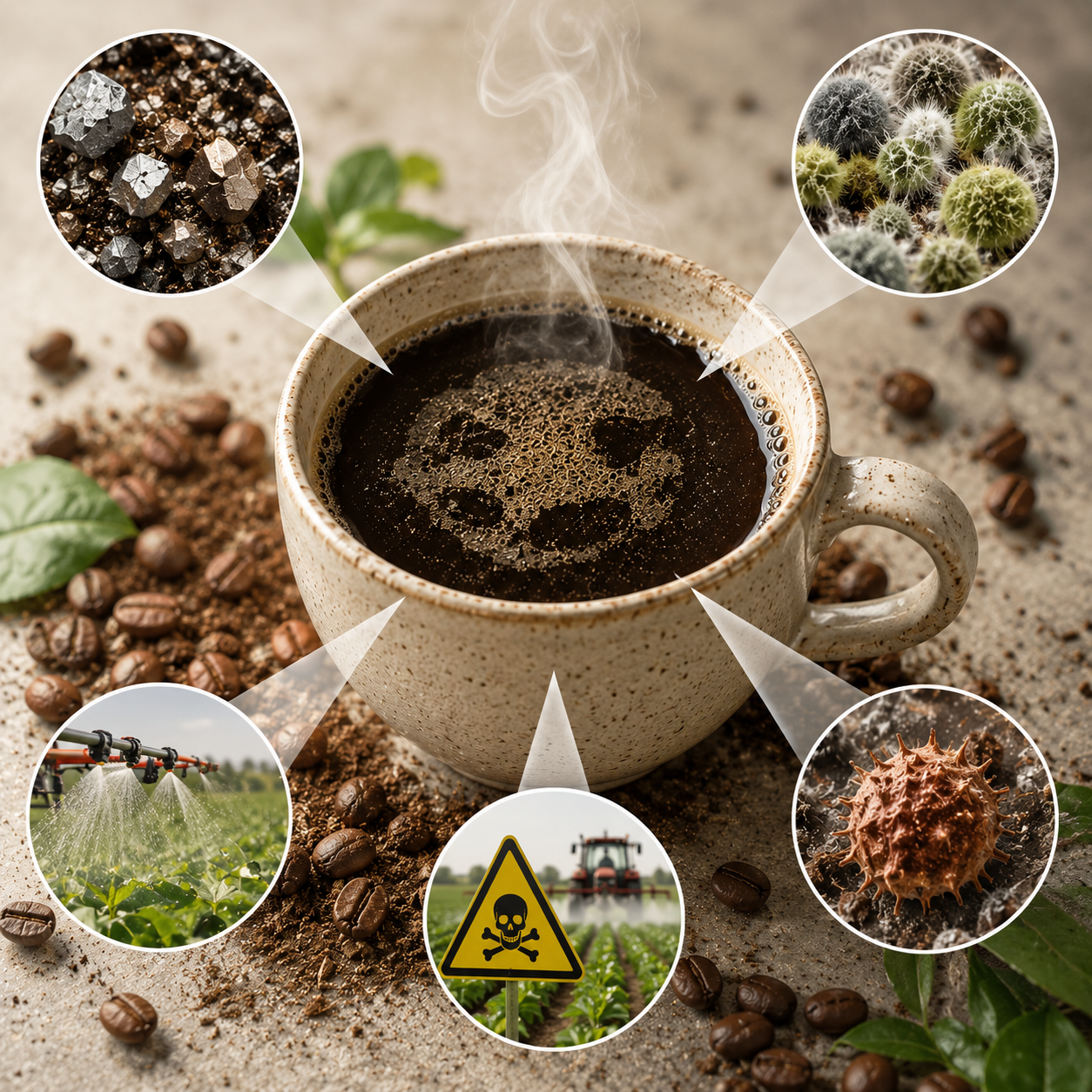
Roasting by-products (acrylamide, furan, 5-HMF):
During roasting, compounds such as acrylamide and furan are automatically formed as a result of the heat. Acrylamide levels are particularly high in light roasts, while furan levels tend to be higher in dark roasts. There is no roasting method that minimizes both at the same time. However, the measured levels are below the relevant risk thresholds (13).
Mold (Ochratoxin A):
Yes, mold on green coffee beans can produce the mycotoxin OTA. However, espresso reduces the OTA content by nearly 50%, while filter coffee reduces it to a much lesser extent. A global analysis of 3,256 coffee samples shows that even four cups a day provide only about 2% of the daily intake considered safe (14).
Heavy metals:
Cadmium, lead, and other elements enter plants through the soil and fertilizers. However, the relevant risk measure (Total Target Hazard Quotient) is below the critical value of 1 in all countries studied worldwide (15).
Pesticides:
Washing, roasting, and brewing eliminate pesticide residues almost completely—in some cases up to 100%. Virtually nothing remains in the finished cup (16).
The story of contaminants is actually a success story for processing. Roasting, washing, and steeping do most of the work for you.
Dehydriert Kaffee?
Muss man mehr Wasser trinken?
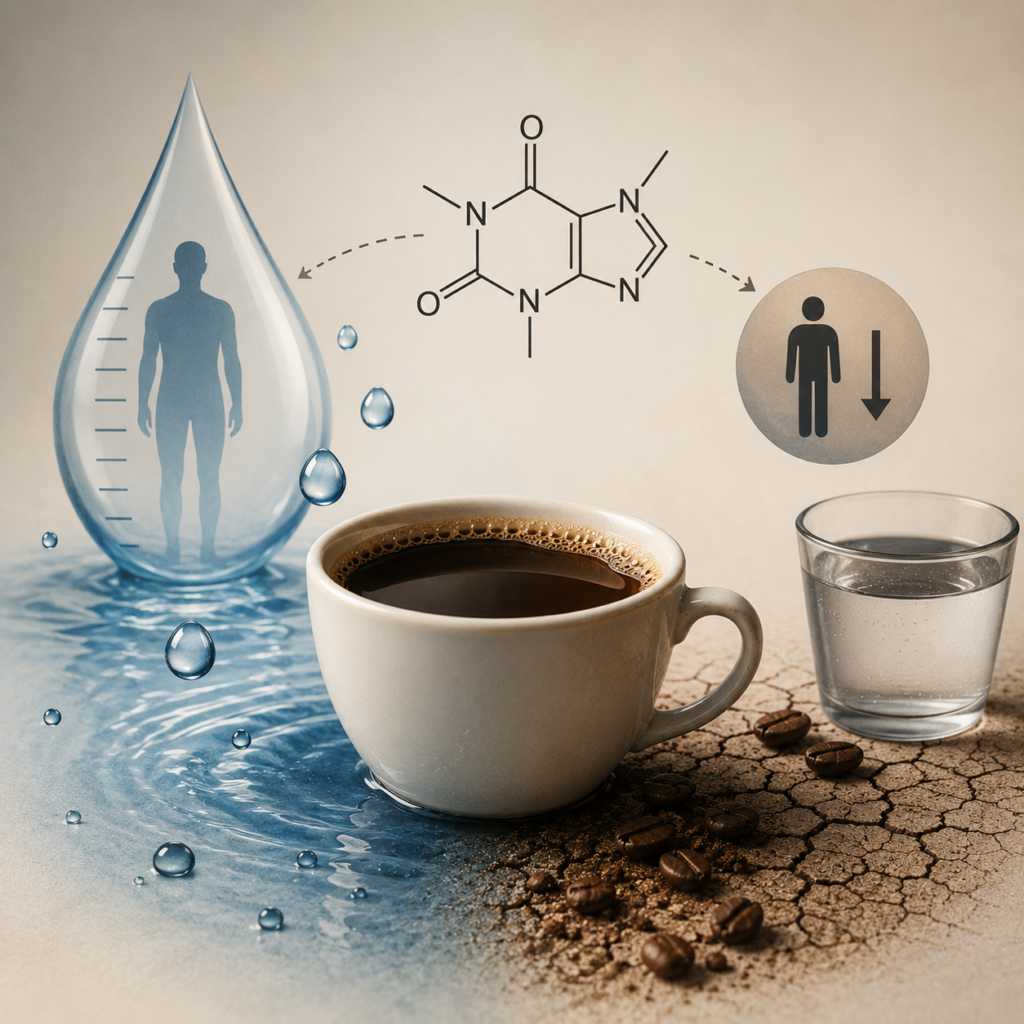
A classic among exercise myths: Coffee dehydrates the body, so you have to drink extra water to compensate. A study lasting several days involving 50 regular coffee drinkers shows: Four cups of coffee a day for three days versus the same amount of water for three days—no difference in fluid balance, urine, or blood values (17). Another 11-day study involving varying amounts of caffeine reached the same conclusion: no signs of a diuretic effect (18).
Relevant for athletes: According to an analysis of 16 studies, even the mild diuretic effect that caffeine can have at rest disappears almost completely as soon as exercise is added (19).
In other words: The coffee you drink before your workout counts toward your fluid intake as usual—no extra water is needed. This applies to moderate, normal consumption. On hot days and during long workouts, be sure to drink enough anyway.
Einfluss auf den Schlaf
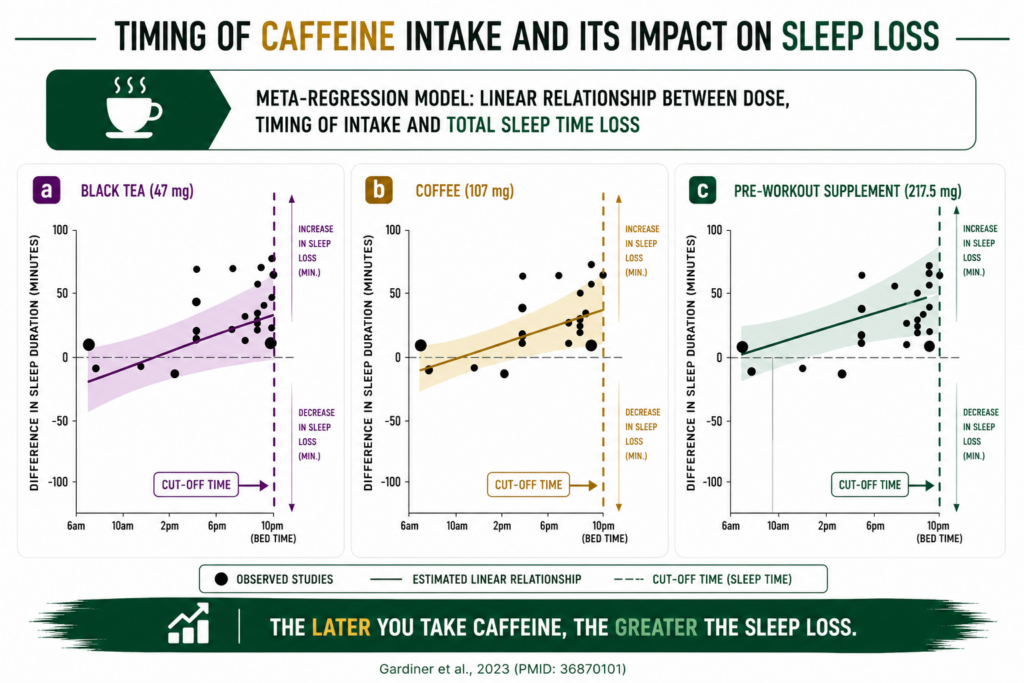
This is where things get serious, because this is the area where the evidence is truly unequivocally negative. A large meta-analysis of 24 studies shows (20):
- Total sleep duration: minus 45 minutes
- Sleep efficiency: down 7%
- Sleep latency: plus 9 minutes
- Deep sleep (N3/N4): minus 11 minutes
The tricky part is this: Even if taken six hours before bedtime, a 400-mg dose of caffeine will still cost you over an hour of sleep, according to a controlled study (21). So, depending on how much caffeine you consume, you should allow plenty of time before bedtime if your sleep and recovery are important to you.
Einfluss der Genetik
Schnelle und langsame Abbaurate
Not everyone metabolizes caffeine the same way, and that’s not just a figment of your imagination. The key difference lies in the CYP1A2 gene. People with the AA genotype are considered fast metabolizers, while those with the C allele (AC/CC) break down caffeine significantly more slowly. CYP1A2 activity can vary by a factor of 5 to 6 between individuals.
This has real-world implications for performance: At 4 mg/kg of caffeine, fast metabolizers improved their 10-km time trial performance by 6.8%. Slow metabolizers, on the other hand, were 13.7% slower (22).
Genetics also play a role in sleep patterns, specifically through the ADORA2A gene, which regulates the sensitivity of adenosine receptors. If coffee makes you jittery in the afternoon or keeps you awake at night, you’re probably a slow metabolizer or particularly sensitive to ADORA2A. In that case, stick to lower doses and cut back earlier.
Safety: What are the current limits?
The EFSA (European Food Safety Authority) has defined the limit as follows (23):
- Up to 400 mg/day: safe for healthy adults (about 4 cups of filter coffee)
- Single doses up to 200 mg: safe even when taken immediately before a workout
- Pregnant women: maximum 200 mg/day
- Children and adolescents: maximum 3 mg/kg of body weight per day
This limit is not based on a single study, but on the overall consensus from international risk assessments. Factors such as toxicity, cardiovascular health, cancer risk, fertility, and bone health have all been considered. Based on the available evidence, caffeine intake below 400 mg is consistently not associated with harmful long-term effects.
Wird diese Grenze deutlich überschritten, ändert sich das Bild: Ab etwa 500 mg/Tag treten verstärkt Symptome wie Tremor, Herzrasen und Angstgefühle auf. Die Sensibilität variiert aber stark von Person zu Person. Nicht jeder muss also zwangsläufig weniger als 400 mg konsumieren. Toxische Effekte wie Krampfanfälle schätzt die FDA ab einer schnellen Aufnahme von ca. 1.200 mg (24).
Conclusion
For most athletes, coffee poses no health risk. Filter coffee has been cleared of concerns regarding the heart, blood vessels, and cholesterol, as well as harmful substances and hydration; the body of research on this topic is now robust and consistent. The only area where caffeine actually causes demonstrable harm is your sleep, and that’s also where individual genetics have the greatest impact. If you have a handle on the timing and know your own metabolic type, you can enjoy coffee without hesitation and even use it specifically as a performance booster.
Nutrition Coaching


0 Comments