



Everything You Need to Know as an Athlete
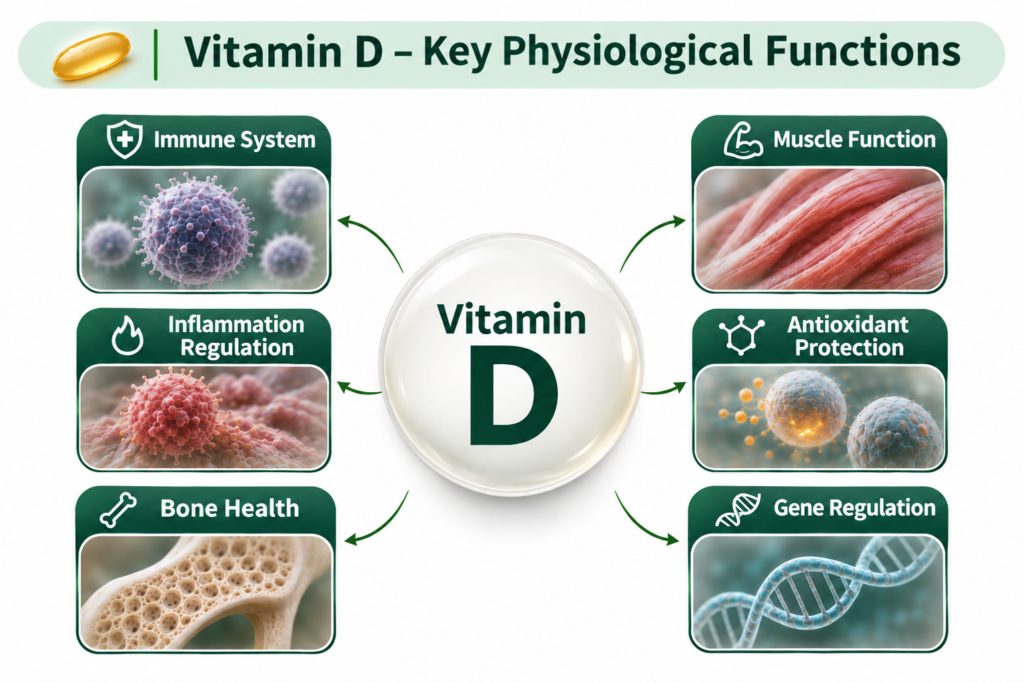
Vitamin D performs numerous important functions in the body: It supports bone health, contributes to normal muscle function, and influences the immune system. An adequate supply is therefore especially important for athletes to maintain their health and endurance over the long term.
Yet it is precisely in Central and Northern Europe that vitamin D deficiency is widespread. From October through March, UVB radiation is barely sufficient to produce enough vitamin D in the skin—even among athletes who train outdoors a lot.
When should you take vitamin D supplements, what blood levels are considered sufficient, and what should the dosage be? We’ll show you what the scientific research says on this topic and what you should keep in mind when taking supplements.
Vitamin D Production in the Skin: UVB Radiation as the Primary Source
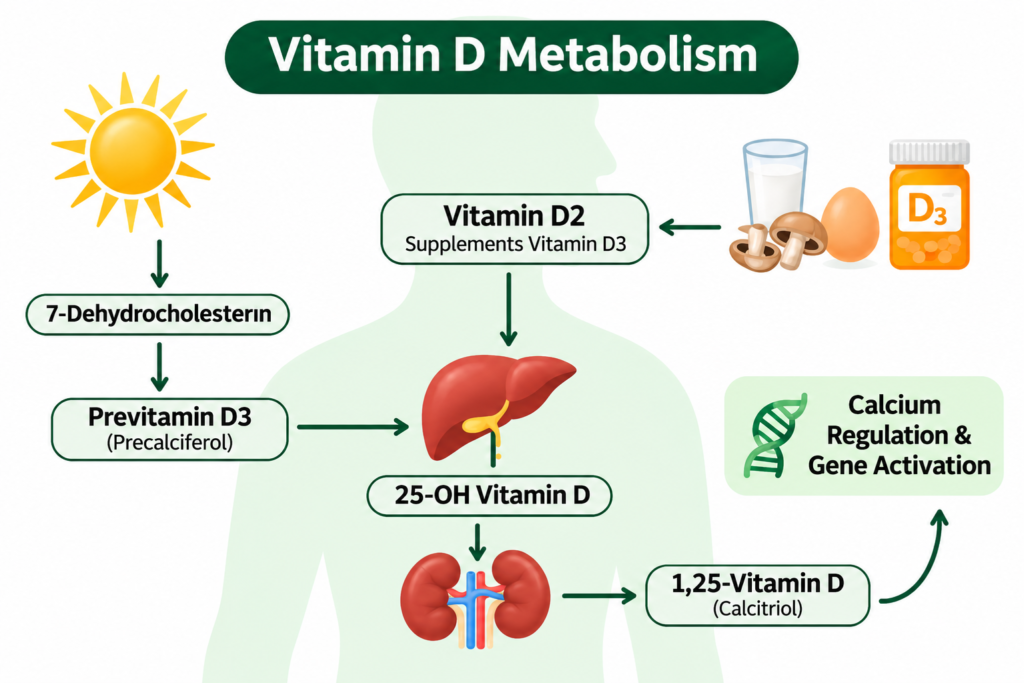
Most vitamin D is produced in the skin. There, UVB radiation converts the precursor 7-dehydrocholesterol into previtamin D3. Body heat then converts this into vitamin D3, also known as cholecalciferol. In Germany, UVB radiation is barely sufficient for this from about October through March (1, 2).
A smaller portion comes from the diet. Vitamin D3 is found in animal-based foods such as fatty fish and eggs, while vitamin D2 (ergocalciferol) is found in mushrooms. However, D3 raises blood levels much more effectively. Most vitamin D supplements therefore contain D3. For vegans, D3 derived from lichen is available.
From the storage form to the biologically active form
In the liver, vitamin D is converted to 25(OH) vitamin D, also known as calcidiol. This stored form circulates in the blood for weeks. It therefore provides a good indication of vitamin D levels, and it is precisely this form that is measured in a blood test.
The active form, calcitriol, is ultimately produced in the kidneys. Its production is strictly regulated by the body’s calcium needs. Calcitriol is therefore unsuitable as a marker of vitamin D status (3).
Based on data from Saponaro et al. (2020)
Why Vitamin D Has Such a Wide Range of Effects
Calcitriol binds to the vitamin D receptor (VDR). This receptor is found in many tissues, such as the intestines, bones, muscles, and immune cells. There, vitamin D specifically controls which genes are turned on or off (4). This also explains why vitamin D influences so many bodily functions.
Practical Guidance: To assess vitamin D status, 25(OH)-vitamin D should always be measured, not calcitriol. Those taking vitamin D supplements should opt for D3; vegans should choose D3 derived from lichen.
Does vitamin D supplementation strengthen athletes’ immune systems?
Intense training puts a strain on the immune system. Especially during periods of high training volume, little sleep, and in the winter, many athletes experience frequent upper respiratory tract infections. Every day spent sick costs training time. An infection shortly before a competition can undermine an entire season’s preparation.
Two modes of action: defense and regulation
Immune cells also have vitamin D receptors through which vitamin D regulates their gene activity. It acts in two ways (5):
- On the one hand, vitamin D strengthens the innate immune system. It promotes the production of antimicrobial peptides such as cathelicidin. These are substances produced by the body that directly combat pathogens.
- On the other hand, it suppresses excessive immune responses. It inhibits pro-inflammatory T cells and promotes regulatory T cells.
What do the studies on susceptibility to infection show?
Low vitamin D levels are also associated with an increased susceptibility to infections. For example, an observational study (6) showed that a 10 nmol/l increase in vitamin D levels was associated with a roughly 7% lower risk of infection.
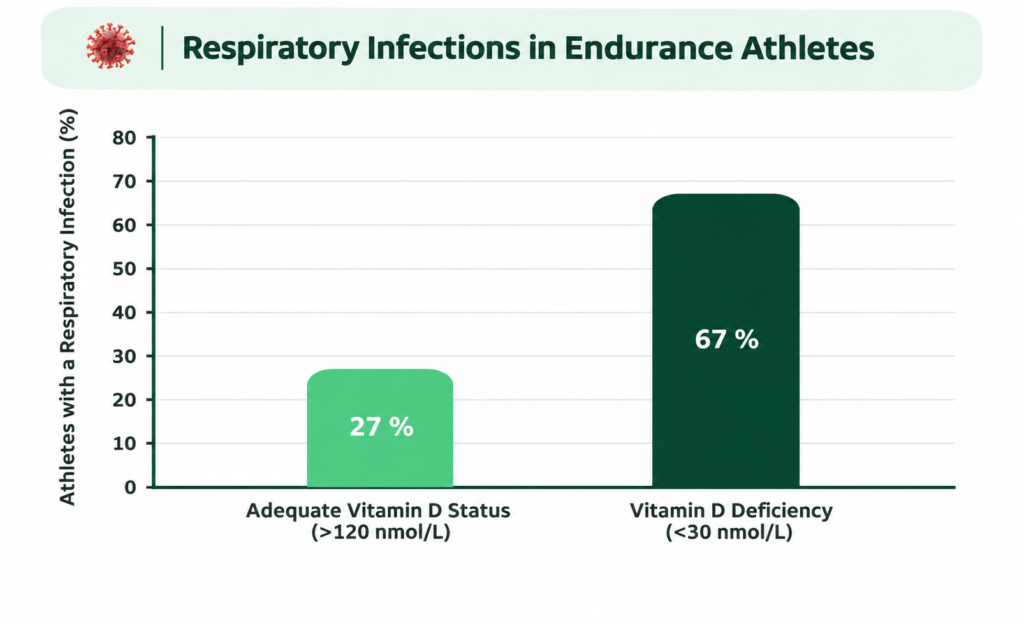
There is also evidence of this among athletes: In a study involving 225 endurance athletes (7), athletes with vitamin D deficiency experienced respiratory infections more frequently during a 16-week winter period. They also reported more sick days and more severe symptoms than athletes with adequate vitamin D levels.
Based on data from He et al. (2013)
Practical Implications: The data show a clear association between low vitamin D levels and more frequent infections. However, since these are observational studies, there is no evidence that vitamin D supplementation reduces the risk of infection.
Does a vitamin D supplement protect bones and prevent stress fractures?
For the bones, vitamin D primarily acts as a “gatekeeper” for calcium. If there is a deficiency, the intestines absorb only a fraction of the calcium from food. To maintain stable calcium levels in the blood, the body then releases the mineral from the bones, as shown by studies on calcium metabolism (8) and calcium absorption in the intestines (9).
Taking Vitamin D Supplements: Recommended in Cases of Deficiency; Offers No Additional Benefits When Intake Is Adequate
Vitamin D supplementation may be beneficial for correcting an existing deficiency. A randomized study of older women in nursing homes (10) shows that this can also yield health benefits: The combination of 800 IU of vitamin D and calcium reduced the number of hip fractures by a significant 43%.
In healthy adults who already have adequate vitamin D levels, however, the evidence tells a different story. In a large-scale RCT study (11), a daily dose of 2,000 IU of vitamin D did not further reduce the risk of fracture.
Stress Fractures: What Do Military Data Show?
Stress fractures are particularly relevant for athletes who repeatedly subject their musculoskeletal system to high levels of stress—for example, in running, triathlons, or jumping sports. Significant data on this topic comes primarily from basic military training, where recruits complete a high volume of training within a short period of time.
In an intervention study involving more than 5,000 female recruits (12), daily intake of 800 IU of vitamin D in combination with 2,000 mg of calcium reduced the risk of stress fractures by 20%. Further studies of military recruits (13, 14) also demonstrated positive effects on bone density and bone resorption.
What does this mean for athletes? An adequate intake of vitamin D and calcium could help support bone health during periods of intense training. However, both nutrients were supplemented together. It is therefore impossible to determine the extent to which vitamin D alone contributed to the observed effects.
More vitamin D doesn’t automatically mean stronger bones. On the contrary!
Does more mean better?
This is not the case with vitamin D. In a three-year study, 311 healthy adults between the ages of 55 and 70 took 400, 4,000, or 10,000 IU of vitamin D3 daily. None of them had a deficiency at the start of the study. Bone density in the forearm decreased slightly in all groups, which is normal with aging. However, the higher the dose, the greater the loss: 1.2% at 400 IU, 2.4% at 4,000 IU, and 3.5% at 10,000 IU (15). Why this is the case remains unclear. The standard measurement (DXA) showed no differences, and bone density remained the same across all groups. Whether high doses actually damage the bones is therefore an open question and must be confirmed by further studies. One thing is certain, however: Very high doses offer no additional benefit!
Even rare, very high single doses are ineffective. On the contrary: In older women, an annual megadose of 500,000 IU increased the risk of bone fractures by 26% (16).
Practical guidance: More isn’t necessarily better in this case! What matters isn’t getting as much vitamin D as possible, but ensuring an adequate level of vitamin D in the body. Any existing deficiency should be specifically addressed.
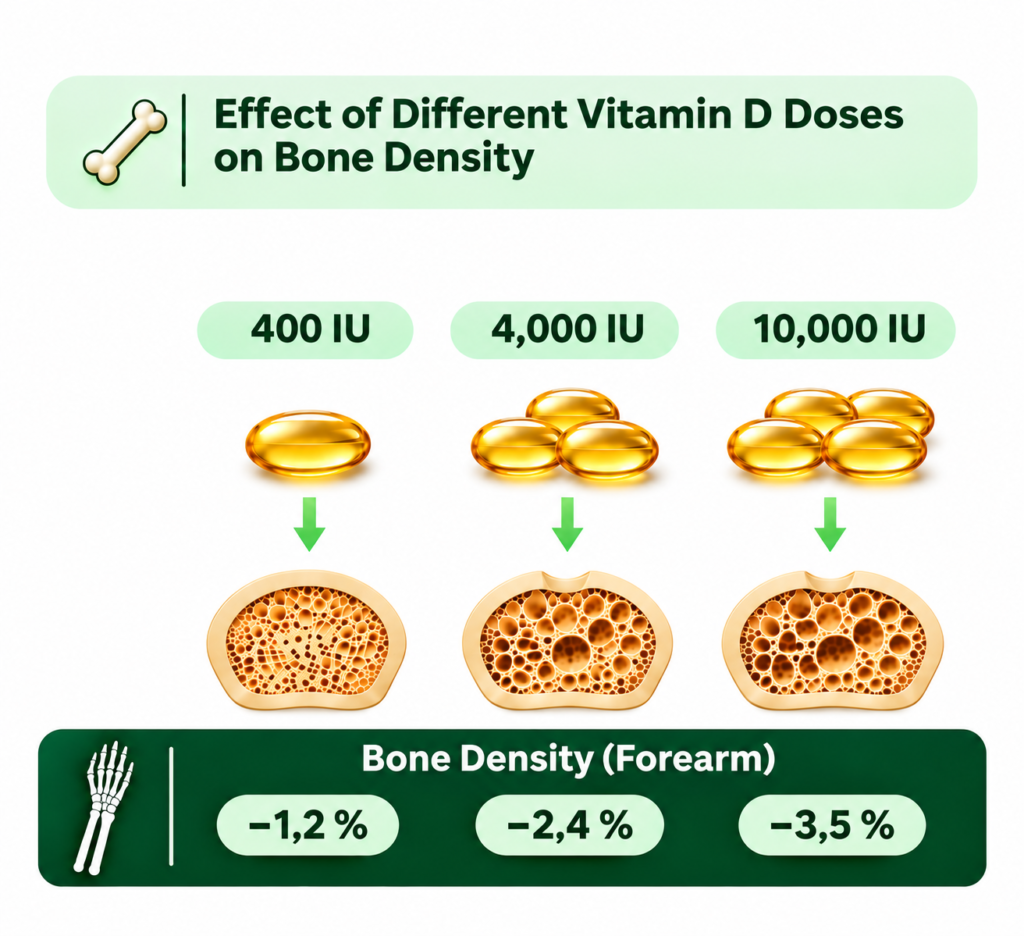
Based on data from: Burt et al. (2019)
Does a vitamin D supplement increase muscle strength and performance?
Muscle cells also express vitamin D receptors. Through these receptors, vitamin D regulates genes that are important for the development and repair of muscle tissue. At the same time, it influences calcium regulation within the muscle cell and thus directly affects muscle contraction (17).
A deficiency is therefore associated with reduced muscle strength, impaired neuromuscular function, and slower Recovery. This is demonstrated by data from professional sports (18) as well as a review study of non-athletes (19). For athletes, this means that those with a significant deficiency may be training below their potential and recovering less effectively between workouts.
It is important to distinguish between a deficiency and optimization. Just because a deficiency impairs muscle function does not mean that a vitamin D supplement will further increase strength or sprint performance in athletes who already have adequate levels. Vitamin D is not a performance-enhancing supplement like creatine or caffeine.
Vitamin D Deficiency in Winter: Why Supplementation Makes Sense in Northern Europe
The body produces about 80–90% of our vitamin D itself—specifically, in the skin when exposed to UVB radiation, as described in a review article (20). This is precisely what becomes a problem in Northern Europe:
Why the Sun Isn’t Enough in Winter
From October through March, the sun is so low in the sky at our latitudes that hardly any UVB radiation reaches the ground. As a result, the skin is practically unable to produce vitamin D, as shown by measurements of seasonal vitamin D synthesis (21). This is why it is also referred to as “vitamin D winter.”
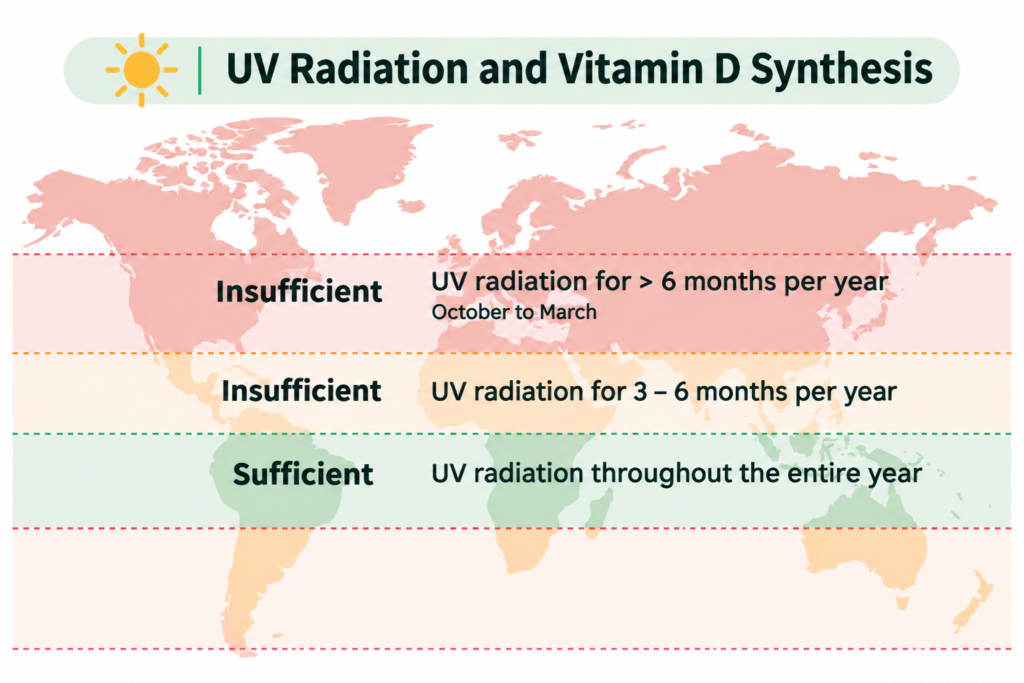
Based on data from Close & Owens (2020)
However, even in the summer, the body’s own production of vitamin D3 is not guaranteed. In one study, even sunscreen with an SPF of 8 almost completely prevented an increase in vitamin D3 levels in the blood. Without protection, on the other hand, the level rose from 1.5 to 25.6 ng/ml (22). Clothing has an even stronger effect. Depending on the fabric, it blocked 48 to 99% of UVB radiation, and in clothed participants, vitamin D3 levels did not rise, even with a sixfold increase in UV exposure (23).
How common is vitamin D deficiency?
Consequently, inadequate care is widespread:
- In Europe, approximately 40% of people have suboptimal vitamin D levels (< 50 nmol/l)
- 13% even have a severe deficiency, with levels below 30 nmol/l
In Germany, this deficiency affects about 15% of adults (24). In the United Kingdom, nearly one in five adults between the ages of 19 and 64 is severely deficient, and in winter, the figure rises to nearly one in three (25). There, however, a level below 25 nmol/l is already considered a deficiency.
Practical Considerations: In Northern Europe, vitamin D deficiency in the winter is the rule rather than the exception. This also applies to athletes, especially those who train indoors a lot. Accordingly, it makes sense to get a blood test in late fall or winter to check whether and how much vitamin D you should be supplementing.
Which athletes should take vitamin D supplements?
A lot of outdoor training does not automatically protect against a deficiency. On average, athletes have similar vitamin D levels to the general population. In Northern Europe, depending on the study and season, 31 to 62% of athletes have levels below 50 nmol/l. This is shown by several studies across various sports (26,27,28).
Indoor Sports and Winter Sports as Risk Factors
The level of risk also depends on the sport. Athletes who train primarily indoors or in the winter are particularly at risk. Of 50 young ice hockey players, 22% had a deficiency and another 40% had an insufficiency (29). Insufficient intake is also widespread among professional skiers (30).
But even outdoor athletes don’t have adequate levels year-round. Soccer players usually have good levels in the summer. In the winter, however, these levels drop significantly without supplementation and often fall into the suboptimal range (31).
Recommendations alone aren’t enough: Vitamin D supplements are often not taken
There is also a practical problem. Even when coaches or nutritionists recommend taking vitamin D supplements in the winter, according to a recent study, only about half of athletes actually do so (32).
Practical Guidance: Vitamin D deficiency is widespread among athletes in Northern Europe, especially in the winter and among those who participate in indoor and winter sports. A blood test in the fall provides clarity. If levels are low, supplementation during the winter should not only be recommended but also consistently implemented.

Do you want to know your vitamin D status and what you should specifically do?
In our 1:1 nutrition coaching, we evaluate your blood values for you and create a nutrition and supplement strategy that fits your training and currentnutrientintake.
Measuring Vitamin D Levels: At What Blood Level Should You Start Taking Supplements?
Vitamin D levels are measured as 25(OH)D in blood serum, usually in nmol/l. Some labs report them in ng/ml. To convert, multiply the ng/ml value by 2.5. So 20 ng/ml equals 50 nmol/l.
The Common Reference Ranges
Most professional associations use the same threshold values.
- Levels above 50 nmol/l are considered sufficient
- 30–50 nmol/l are considered suboptimal, and levels below 30 nmol/l are considered a deficiency.#
These values are based primarily on bone health. This classification is used by, among others, the German Nutrition Society (DGE) (33), the Robert Koch Institute (34), the European Food Safety Authority (EFSA) (35), and the U.S. National Academy of Medicine (36).
Do athletes need higher target values?
For a long time, there was a prominent dissenting opinion. In 2011, the Endocrine Society recommended a higher target level of at least 75 nmol/l. However, it withdrew this recommendation in 2024. In its current guideline (37), following an evaluation of major studies from recent years, it no longer defines fixed thresholds. For healthy adults, it even advises against routine blood tests. The reason: Controlled studies have failed to demonstrate any benefit of higher levels.
Nevertheless, target ranges of 75 to 100 nmol/l continue to be cited in sports nutrition. However, based on current knowledge, there is a lack of evidence from controlled studies to support this.
Practical guidance: Based on current knowledge, a level above 50 nmol/l is considered sufficient. There is no evidence that aiming for higher levels through supplements provides any additional benefit.
Getting the Right Amount of Vitamin D: How Much Vitamin D Should Athletes Take as a Supplement?
A blood test is the best way to determine whether you should take a vitamin D supplement. If your level is below 50 nmol/l, a vitamin D supplement is recommended.
How much does a vitamin D supplement raise vitamin D levels?
A dose-response study involving 76 healthy adults (38) shows how much different doses actually raise vitamin D levels. The participants started with a low baseline level averaging about 32 nmol/L. They then took a vitamin D3 supplement at different doses (400, 800, 1,200, and 2,000 IU/day) or a placebo for 4 months.
The levels rose in a clearly dose-dependent manner. On average, all groups were above 50 nmol/l after 16 weeks. What is noteworthy, however, is the trend: At all doses, the levels plateaued after about six weeks and hardly rose any further after that. And not everyone benefited to the same extent. Even at 2,000 IU, not all participants reached 50 nmol/l. For this reason, our recommendations are slightly higher than those of some professional societies. The German Nutrition Society (DGE), for example, recommends “only” 800 IU (20 µg) per day for adults (39).
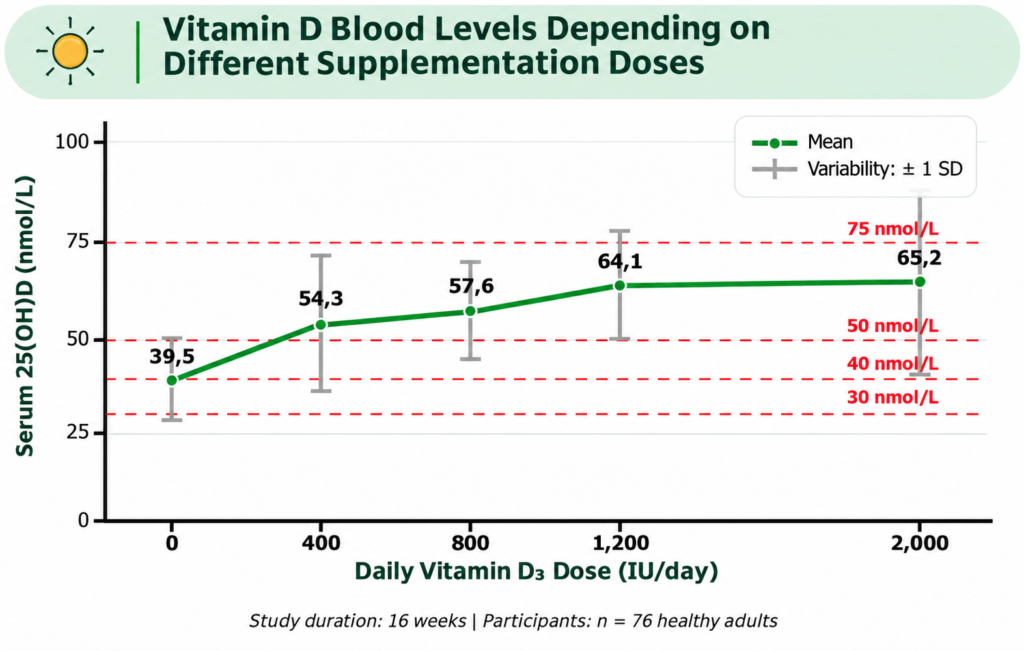
Based on data from: Yao et al. (2016). European Journal of Nutrition, 55(1), 383–392.
Our Vitamin D Dosage Recommendation for Athletes
Based on this study, we derive the following recommendation for vitamin D supplementation, adjusted according to the measured levels:
| Vitamin D Status | Recommended Daily Intake |
|---|---|
| Adequate(>, 50 nmol/L) | 600–1,000 IU |
| suboptimal(30–50 nmol/L) | 2,000 IU |
| Deficiency(<, 30 nmol/L) | 2,000–4,000 IU |
| No measurement available | 1,000–2,000 IU |
After about 6 to 8 weeks, it’s a good idea to have a follow-up test. Since levels plateau after about 6 weeks, this test reliably shows whether the dose is appropriate. Ideally, the dose should be based on the measured baseline value. For most athletes with suboptimal levels, 2,000 IU per day is sufficient during the winter months. If a deficiency has been diagnosed, a higher dose of up to 4,000 IU may be appropriate in the short term.
Taking Vitamin D Correctly: Fat Intake, Vitamin Form, and Supplements
It’s not just the right dosage that matters. When and in what form you take vitamin D can also affect absorption. In this section, you’ll learn about the role fat plays in absorption, whether vitamin D3 is better than D2, and what to look for when choosing a supplement.
Why You Should Take Vitamin D With a Source of Fat
Vitamin D is fat-soluble and, as a result, is absorbed much more effectively when dietary fat is present in the intestines. A study examining the effects of varying fat intake on vitamin D absorption demonstrates the extent of this effect (40). In that study, daily intake of 50,000 IU over two weeks increased 25(OH)D levels only when 26 g of fat were consumed at the same time. With a fat intake of just 1.6 g, the levels remained unchanged.
Practical advice: Take your vitamin D supplement with a main meal that contains some fat. This could be breakfast with eggs, yogurt, or nuts, or lunch with olive oil, salmon, or avocado.
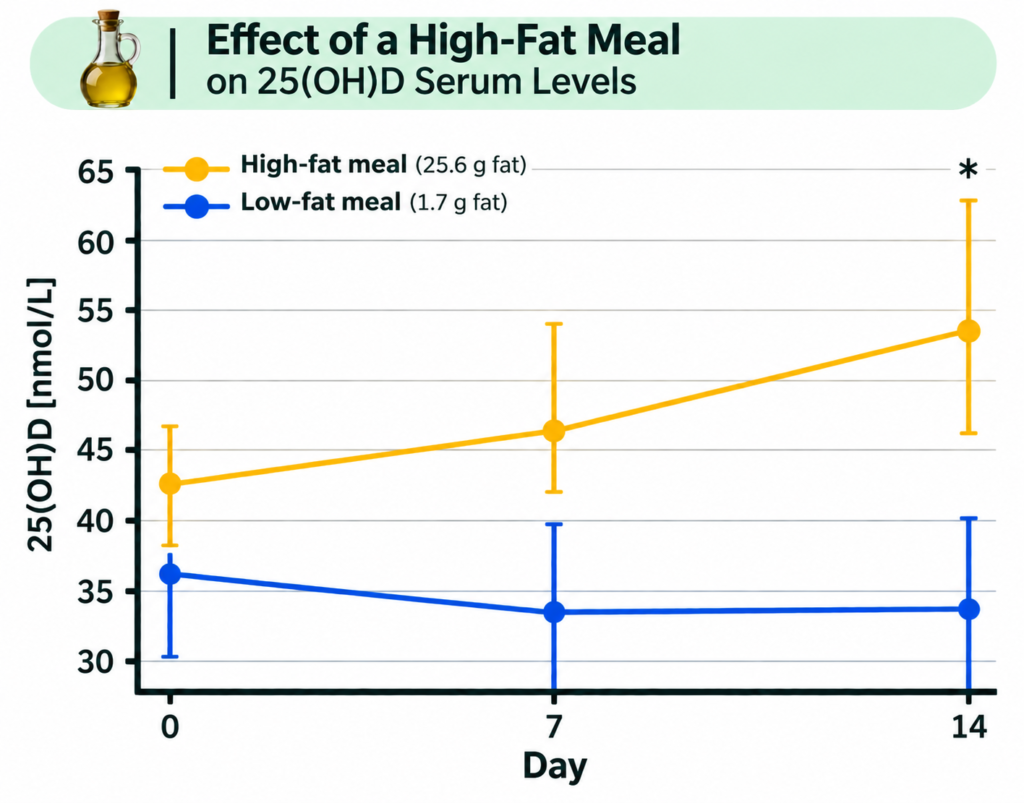
Based on data from: Raimundo et al. (2011). International Journal of Endocrinology, 2011, 809069.
Vitamin D3 or D2: Which Form Is Better?
The answer is clear: Vitamin D3 generally raises blood vitamin D levels more effectively than vitamin D2. This is also confirmed by a recent meta-analysis from 2024 (41), which evaluated 20 comparative studies. When taken daily, vitamin D3 led to a significantly greater increase in total 25(OH)D levels than vitamin D2. On average, the increase with vitamin D2 was about 40% lower. However, the differences between the studies were considerable and were influenced, among other factors, by body weight.
Why is that?
Both forms of vitamin D are initially absorbed equally well and are then converted in the liver to 25-hydroxyvitamin D [25(OH)D]. This stored form is measured in the blood and serves as the most important marker of vitamin D status. The main difference lies in how long the two forms—or their metabolic byproducts—remain available in the body. Vitamin D2 appears to be broken down more quickly and can also reduce 25(OH)D3 levels. As a result, the increase in total 25(OH)D is lower with vitamin D2 (42).
For athletes, this means: Choose a vitamin D3 supplement (cholecalciferol). Those who follow a vegan diet can find D3 derived from lichen as a plant-based alternative.
Drops, capsules, or tablets: Which vitamin D supplement is right for you?
Vitamin D3 is available as drops, softgel capsules, or tablets. But which form is best? In fact, there is currently no convincing evidence that oil-based drops or softgels are generally absorbed better than tablets. The key factors are the active ingredient, the dosage, and consistent intake. Furthermore, the fact that a supplement already contains oil does not automatically make additional fat intake unnecessary: the amount of fat it contains is usually small and cannot be equated with a high-fat meal. A recent scientific consensus report confirms that there is no convincing evidence of a general superiority of oil-based supplements over powdered products (43).
When buying a vitamin D supplement, you should therefore keep the following points in mind:
- Active ingredient: Choose vitamin D3 (cholecalciferol) over vitamin D2 (ergocalciferol), as D3 generally raises blood vitamin D levels more significantly and for a longer duration. For those following a vegan diet, vitamin D3 derived from lichen is available.
- Dosage per unit: Supplements containing 1,000 or 2,000 IU per drop or capsule make it easy to adjust your daily intake. The key is to ensure that the total dose is appropriate for your vitamin D status and your individual needs.
- No long-term high doses: Supplements containing 10,000 IU or more per day are not intended for long-term use on one’s own. According to recommendations from the EFSA and the U.S. Institute of Medicine, the tolerable upper daily intake for adults is 4,000 IU. Higher doses may be appropriate in certain medical situations but should be taken under medical supervision.
- Taking it with a meal: Since vitamin D is fat-soluble, taking it with a meal that contains some fat can improve absorption. A particularly high-fat meal is not necessary for this. The most important thing is to take it regularly.
Vitamin D Overdose: What Is the Upper Limit for Supplements?
Yes, a consistently high intake of vitamin D supplements can be toxic. The main problem is a condition known as hypercalcemia—excessively high calcium levels in the blood. Vitamin D increases calcium absorption from the intestines. If too much vitamin D is taken over an extended period, the calcium concentration in the blood can rise excessively.
Possible symptoms include nausea, vomiting, loss of appetite, muscle weakness, excessive thirst, and frequent urination. In severe cases, however, kidney stones, kidney damage, cardiac arrhythmias, and even kidney failure may also occur (44).
What is the safe upper limit?
The EFSA (European Food Safety Authority) and the U.S. Institute of Medicine (IOM) have established a Tolerable Upper Intake Level (UL) for adults of 4,000 IU (100 µg). This value represents the total daily intake from food and supplements that is expected to pose no significant health risk to the general population when consumed over the long term. A generous safety margin is already built into this value.
This derivation is based on studies in which adverse effects were observed or assessed as a potential source of risk at a daily intake of 10,000 IU. The EFSA identified increased urinary calcium excretion (hypercalciuria) as a sensitive safety marker. An uncertainty factor of 2.5 was applied to the underlying value of 10,000 IU. This results in an UL of 4,000 IU per day (45, 46).
It is important to note that the UL is not a toxicity threshold. Taking more than 4,000 IU does not necessarily lead to side effects. Conversely, a lower dose does not completely rule out adverse effects. A meta-analysis of 22 randomized trials involving nearly 13,000 participants also found an increased relative risk of hypercalcemia at doses of 3,200–4,000 IU daily for at least six months. In absolute terms, however, only about 4 additional cases per 1,000 people occurred (47).
Why Consistently High Doses Can Also Be Problematic for the Bones
A high intake of vitamin D does not automatically provide additional benefits. In a three-year randomized study involving 311 healthy adults, daily intake of 4,000 or 10,000 IU of vitamin D3, compared to 400 IU, led to a greater decrease in bone density in the forearm. At 10,000 IU, bone density in the tibia was also reduced to a greater extent. No improvement in bone strength due to the higher doses could be demonstrated (Burt et al., 2019).
Practical guidance: Without a medical indication, there is no reason to take high doses of vitamin D on a long-term basis or to adhere to the upper limit of 4,000 IU. For most adults, a dosage tailored to their needs is sufficient. Higher doses may be medically appropriate in cases of a confirmed deficiency, but should then be taken under medical supervision.
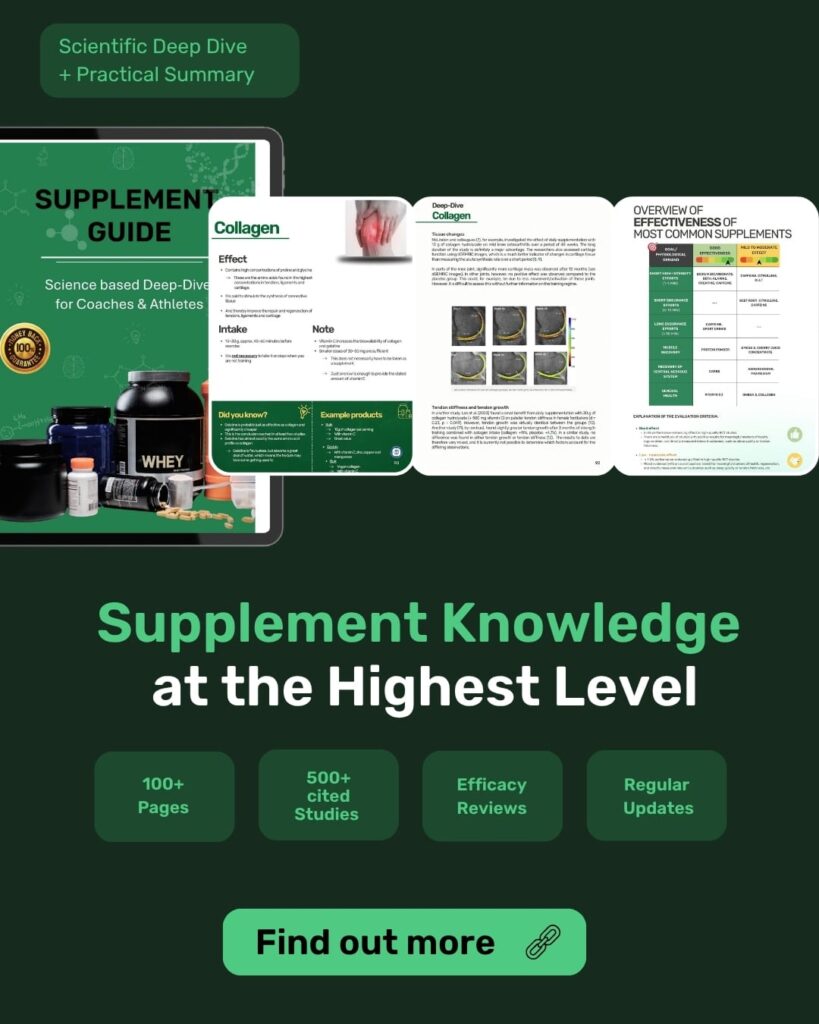
Vitamin D is just one of many supplements that can be beneficial for athletes. Which ones really work, and which ones can you do without? In our supplement eBook, you’ll find evidence-based in-depth analyses of all relevant supplements, including dosage, timing, and practical guidance.
Frequently Asked Questions About Vitamin D Supplementation in Sports (FAQ)
Should all athletes take vitamin D supplements in the winter?
Not necessarily. Ideally, you should get a blood test in the fall. If the level is below 50 nmol/l, supplementation is advisable. Without a test result, 1,000–2,000 IU per day from October through March is a safe and sensible choice.
Which vitamin D supplement is best for athletes?
A vitamin D3 supplement containing 1,000 or 2,000 IU per serving, taken with a meal containing fat. Whether it’s drops, capsules, or tablets is secondary. For vegan athletes, D3 derived from lichen is a suitable option.
How long does it take for a vitamin D supplement to take effect?
When taken daily, the level rises over several weeks and reaches a plateau after about six weeks. A follow-up measurement after 6 to 8 weeks will show whether the dose is appropriate.
Does a vitamin D supplement improve athletic performance?
Only if there is a deficiency to begin with. For athletes with adequate levels, there is no evidence of an additional performance benefit.
What is the optimal vitamin D level for athletes?
Based on current knowledge, levels above 50 nmol/l (20 ng/ml) are considered sufficient. There is a lack of evidence from controlled studies to support higher target levels.
When during the day should I take my vitamin D supplement?
The time of day is of secondary importance. What matters is that you take it with a meal that contains some fat.
At what dose is vitamin D too much?
The upper limit for long-term intake in Europe and the U.S. is 4,000 IU per day. You should only take supplements above this level if you have been diagnosed with a deficiency and in consultation with a doctor.
Is exercising outdoors enough to produce enough vitamin D?
In the summer, often yes; in the winter, no. From October through March, UVB radiation in Central and Northern Europe is too weak. Even outdoor athletes, such as soccer players, often fall into the suboptimal range during this time.
Is vitamin D3 from lichen just as effective?
Yes. It’s the same form—cholecalciferol—but derived from a plant source. It’s therefore the best choice for vegan athletes.
Summary: Vitamin D Supplementation for Athletes
- Häufigkeit: 31–62 % der Athleten in Nordeuropa liegen je nach Studie und Jahreszeit unter 50 nmol/l. Besonders betroffen sind Hallen- und Wintersportler.
- Mögliche Folgen: Ein niedriger Vitamin-D-Status wird mit mehr Atemwegsinfekten, geringerer Muskelkraft und einem höheren Risiko für Stressfrakturen in Verbindung gebracht.
- Supplementierung: Besonders sinnvoll bei niedrigen Vitamin-D-Werten. Bei gut versorgten Sportlern bringen zusätzliche oder hohe Dosen keinen nachgewiesenen Vorteil und können langfristig sogar der Knochendichte schaden.
- Dosierung: 30–50 nmol/l: 2.000 IE täglich; unter 30 nmol/l: vorübergehend 2.000–4.000 IE. Ohne Messwert: 1.000–2.000 IE im Winter.
- Einnahme: Zu einer Mahlzeit mit etwas Fett. Ohne ärztliche Begleitung dauerhaft nicht mehr als 4.000 IE täglich.
- Einordnung für die Praxis: Vitamin-D-Spiegel idealerweise im Herbst messen und die Dosierung daran anpassen. Nach 6–8 Wochen erneut kontrollieren.


0 Comments