



Marketing vs. Mechanism
The market for electrolyte products has grown rapidly in recent years. Specialty manufacturers such as Precision Hydration and SaltStick market customized sodium formulas, while companies like LMNT and Nuun focus on high sodium doses. The core message is almost always the same:
Electrolytes—especially sodium—are essential for hydration. But is that really true?
Sodium undoubtedly plays a central physiological role in fluid balance. Whether this role is clinically relevant for all of the physical stressors an athlete faces is another question.
As is so often the case, context and nuances are very important. And that is exactly what this article is about:
- Understanding the physiological mechanisms by which sodium affects fluid balance (beyond the simplified formula “water follows sodium”)
- At what level of sweat and sodium loss do important physiological parameters—and performance—begin to be negatively affected?
- What does the evidence from randomized intervention studies look like—broken down by different durations of exercise?
- Practical recommendations based on the current state of scientific research
The key finding, in a nutshell: Sodium improves fluid retention and stabilizes plasma volume—this is well documented (1). A measurable performance benefit, however, can only be demonstrated under specific conditions. Distinguishing between physiological effects and performance effects is the most important distinction in the entire literature on this topic.
Basic Physiology: How Sodium Regulates Fluid Balance
Sodium is the most abundant electrolyte (cation) in the extracellular space. This fact is well known. Less well understood is the precise mechanism by which sodium regulates fluid distribution, renal water excretion, and plasma volume, and why this mechanism is so crucial for sports nutrition.
Fluid Compartments and Ion Distribution
Total body water (TBW) accounts for about 60% of body mass in adults. For an athlete weighing 75 kg,total body water (TBW) accounts for an average of about 60% of body mass in adults. For an athlete weighing 75 kg, this corresponds to about 45 liters of water, which is distributed across two major fluid compartments.
The largest portion (approximately 30 liters, or two-thirds) is located inside the cells (intracellular space), where potassium (K⁺) is the dominant cation. The remaining third (approximately 15 liters) is located outside the cells (extracellular space) and consists of the fluid between the cells (interstitium, approximately 11 L) and blood plasma (approximately 3.5 L). Here, sodium (Na⁺) is the most important cation.
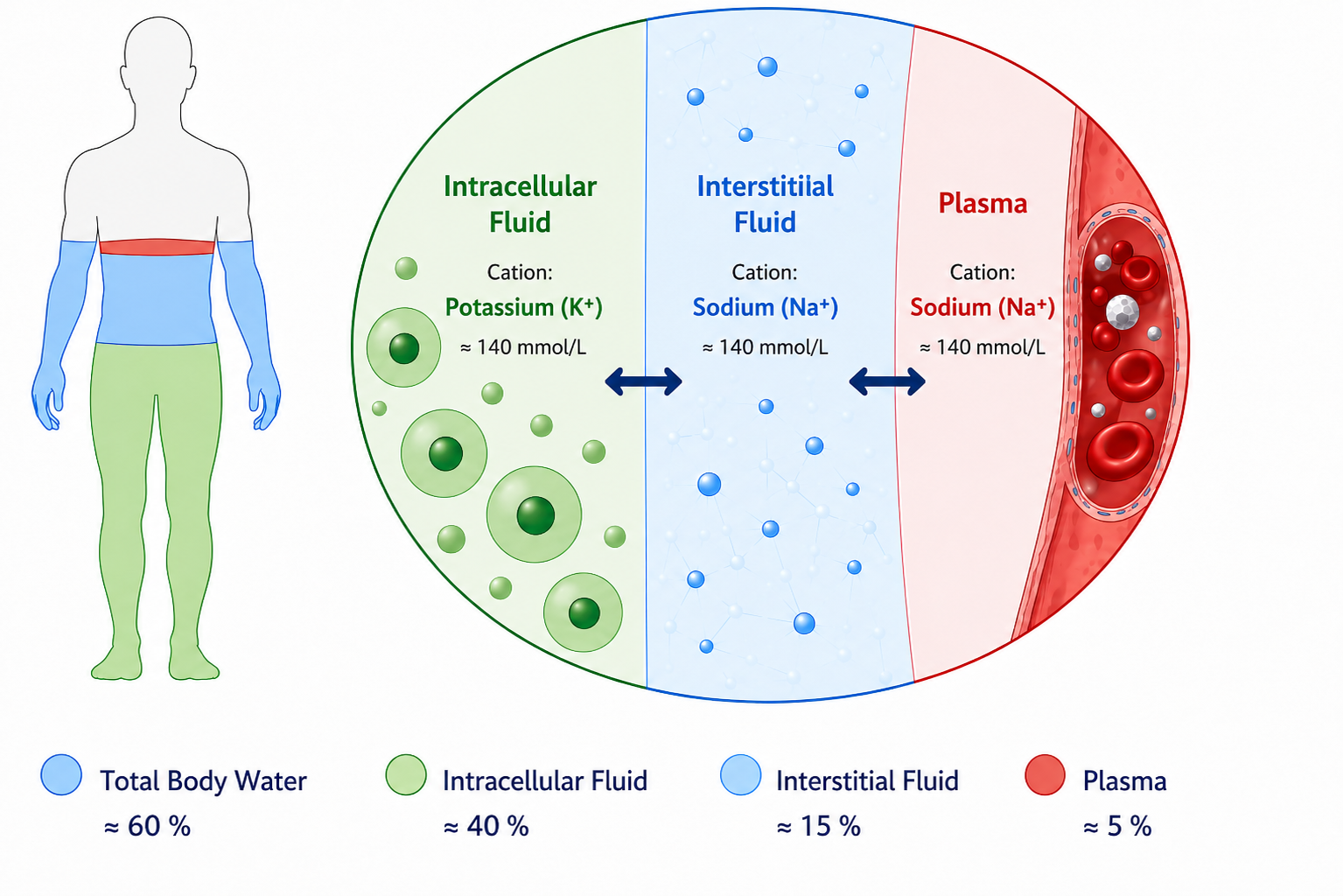
The distribution of body water among these compartments is largely determined by plasma osmolality —which refers to the concentration of all dissolved substances in the blood. Under normal conditions, it ranges from about 285 to 295 mOsm/kg, with sodium having the greatest influence on this value.
Since water can easily pass through cell membranes, whereas sodium can only do so to a limited extent, water always moves toward the higher sodium concentration to equalize concentration differences.
Sodium thus plays a key role in determining how body water is distributed among blood plasma, tissues, and cells, and is essential for maintaining plasma volume.
This mechanism is of central importance in sports nutrition. Although water and various electrolytes are lost through sweating, by far the greatest loss of electrolytes involves sodium. A sufficient sodium intake therefore does not cause water to be absorbed more quickly, but rather ensures that more of the ingested fluid is retained in the extracellular space—and thus also in the blood plasma. For this reason, scientific research on hydration and rehydration focuses almost exclusively on sodium.
Why Magnesium and Potassium Are Secondary to Hydration
Although commercial electrolyte products often market sodium, potassium, and magnesium as equivalent, their roles in fluid balance differ significantly. Sodium is the most important cation in the extracellular space and plays a key role in determining osmolality and plasma volume. Potassium and magnesium, on the other hand, are found primarily inside the body’s cells and play only a minor role in the acute regulation of water balance.
The composition of sweat also illustrates this difference. On average, about 900 mg of sodium, 200 mg of potassium, and 10 mg of magnesium are lost per liter of sweat (see table). While sodium losses can vary considerably among individual athletes, losses of potassium and, in particular, magnesium remain comparatively low.
Average Electrolyte Losses Through Sweat
| Electrolyte | Average Loss | Typical Range | Relevance for Hydration |
|---|---|---|---|
| Sodium Na⁺ |
≈ 800 mg/L | 300–1,610 mg/L | Determines extracellular osmolality, supports fluid retention and the maintenance of plasma volume. |
| Potassium K⁺ |
≈ 200 mg/L | 80–390 mg/L | Important for muscle and nerve function, but has no relevant impact on acute rehydration. |
| Magnesium Mg²⁺ |
≈ 3–5 mg/L | 0.5–10 mg/L | Essential for numerous enzymatic reactions and energy metabolism, but has no relevant effect on acute hydration. |
Sources: Baker et al., 2019 (2), Baker, 2020 (3)
With sodium in particular, we see extremely large individual variations in terms of loss through sweat. So-called “salty sweaters” lose up to 7 times more sodium than people with very low salt loss.
However, what matters is not only how much of an electrolyte is lost, but also what function it serves in the body. When sodium is lost through sweating, the amount of sodium in the extracellular space decreases. If only water is consumed afterward, the remaining sodium is further diluted. To restore the sodium concentration in the blood to normal levels, the body excretes some of the excess water through the kidneys. As a result, a portion of the ingested fluid is lost relatively quickly. If, on the other hand, the beverage contains sufficient sodium, the sodium concentration in the extracellular space is better maintained. As a result, more of the ingested fluid can remain in the blood and tissues, and plasma volume is restored more quickly.
Although potassium and magnesium are essential for muscle and nerve function as well as numerous metabolic processes, the amounts lost through sweat are too small to have a measurable effect on acute hydration or rehydration.
Even when compared to the recommended daily intake, these losses are relatively small. Even with a sweat loss of 2 liters , an athlete loses , on average:
- Potassium: approx. 400 mg (≈ 9–11% of the recommended daily intake of 3,500–4,700 mg)
- Magnesium: approx. 20 mg (≈ 5–7% of the recommended daily intake of 300–400 mg)
These amounts can generally be easily balanced through a well-rounded diet and do not warrant specific supplementation during or immediately after exercise. Sodium therefore occupies a special position and is, consequently, the focus of scientific research on hydration and rehydration.
🎧 Podcast Tip: In Episode #63 of our athlEATradio podcast , “Everything You Need to Know About Magnesium?,” we take an in-depth look at the most important physiological functions of magnesium and the latest research findings regarding athletes.
Dehydration, Plasma Volume, and Impaired Performance
Now that we understand how sodium regulates fluid balance, we can ask: What happens physiologically when significant amounts of sweat are lost during exercise, and how does this affect performance?
Plasma Volume: The Physiologically Critical Parameter
Blood plasma accounts for approximately 55% of blood volume (in a 75-kg athlete: ~3.5 L) and consists of ~90% water. It transports oxygen, substrates, hormones, and heat. From a cardiovascular perspective, plasma volume is the key factor because it determines the venous return (preload) to the heart and thus indirectly influences the heart’s stroke volume.
The fluid in sweat comes primarily from blood plasma. With a sweat loss of 1 L/h and an exercise duration of 2–3 hours, plasma volume can decrease by 10–20% without fluid intake—depending on intensity, temperature, and individual sweating patterns—which then places a greater strain on the cardiovascular system (4).
Cardiovascular Drift: The Mechanism in Detail
A landmark study from 1992 (5) was the first to systematically quantify the relationship between dehydration and cardiovascular drift. Eight trained cyclists rode under four test conditions:
- 2 hours at 33 °C (50% relative humidity)
- without fluid intake during exercise (=placebo)
- or by replacing 20%, 48%, or 81% of the heat loss.
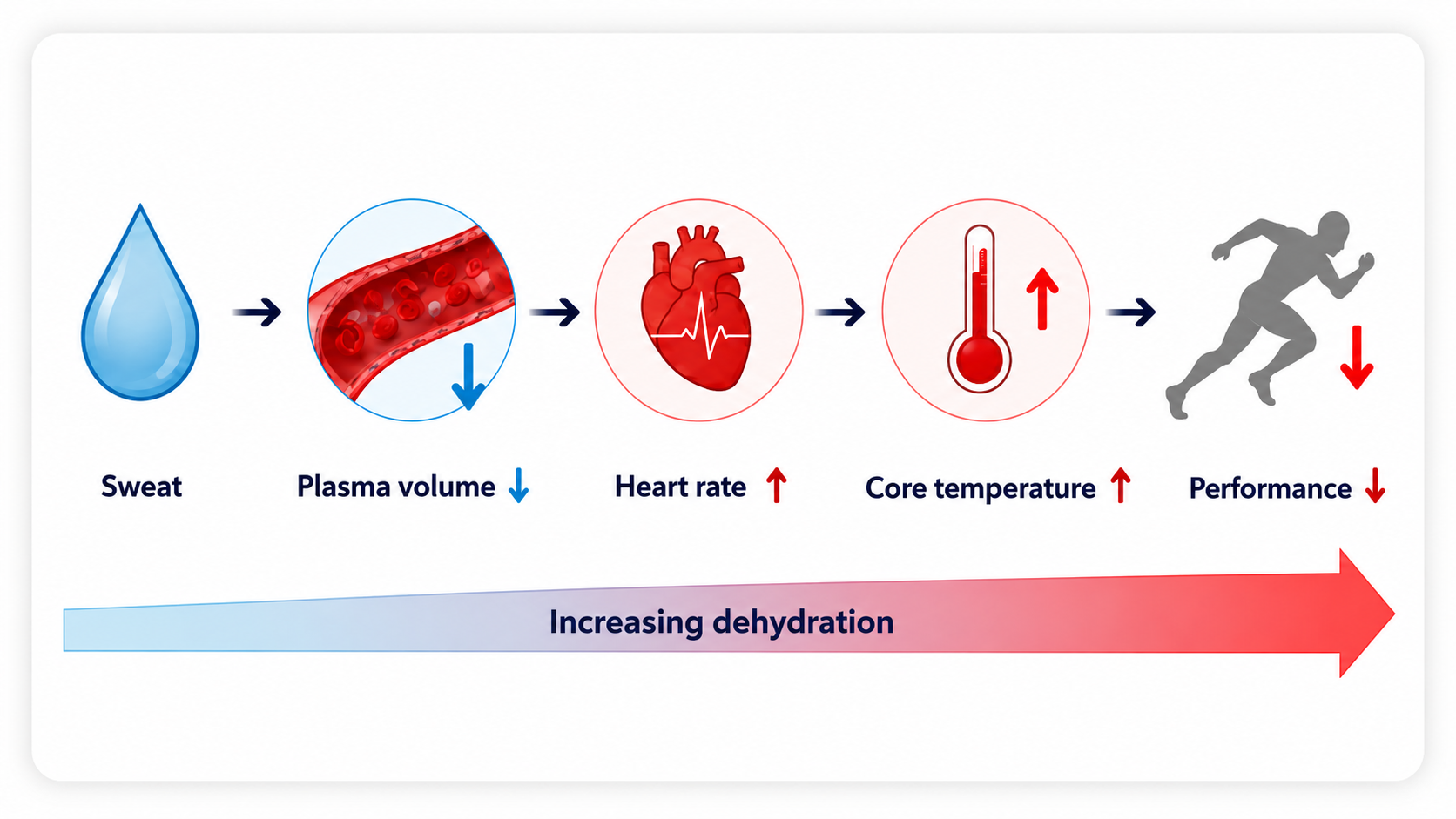
The result was a clear dose-response relationship: the lower the fluid replacement, the greater the increase in heart rate and core body temperature. For every 1% loss of body mass due to dehydration, rectal temperature rose by approximately +0.22 °C and heart rate by approximately +3–4 beats/min. Stroke volume and cardiac output decreased accordingly.
The underlying mechanism:
- Fluid loss → plasma volume decreases → venous return (preload) decreases
- Decreasing preload → stroke volume decreases (Frank-Starling mechanism)
- Compensation: Heart rate increases (cardiovascular drift)
- Less blood available for skin perfusion → heat dissipation is impaired
- Core body temperature rises → central fatigue → earlier decline in performance
This is how severely dehydration impairs cardiovascular function
González-Alonso et al. (6) demonstrated that dehydration—regardless of hyperthermia—severely impairs cardiovascular function. Fifteen endurance-trained cyclists (VO₂max: 4.5 L/min) exercised to exhaustion (100–120 min) in the heat and were either dehydrated to a 4% loss of body mass or remained euhydrated. The result: Dehydration led to drastic cardiovascular impairments:
- Stroke volume decreased from 131 to 81 mL per beat (−38%)
- Cardiac output decreased from 17.3 to 11.5 L/min (−34%)
If there is not enough fluid circulating in the bloodstream, simply put, less blood reaches the heart. The left side of the heart can then fill with less blood with each beat and, accordingly, eject less. The heart basically pumps only what it receives (Frank-Starling principle).
In 2020, researchers were able to precisely demonstrate this effect through a measurement (7): The filling volume of the left ventricle before each beat corresponded almost exactly to the blood volume (correlation r = 0.995—that is, nearly perfectly linear).
Less blood volume → less filling → less stroke volume → the heart beats faster to compensate for the shortfall (=cardiovascular drift).
How Sodium Helps with Rehydration
After a long, sweaty session, water alone usually won’t fully rehydrate you. Here’s why: sweat contains both water and sodium. If you only drink water afterward, you dilute the sodium that’s left in your blood even further. To keep your blood sodium in a safe range, your kidneys respond by flushing out some of that extra water. Net result: you retain less fluid, and it takes longer to restore your blood volume.
One of the first studies (8) on this mechanism was conducted by Nose et al. (1988). After dehydration of approximately 2.3% of body weight, the subjects were given either water or a sodium-containing solution. After just 20–30 minutes, plasma volume in the sodium group had almost completely recovered, while in the water group, plasma volume had still not returned to its original level even after 60 minutes. At the same time, plasma osmolality remained more stable, and urine output was significantly lower than after water alone.
Maughan & Leiper (1995) conducted an even more detailed study of the effects of sodium (9).
After dehydration of approximately 2% of their body weight, the subjects were given beverages containing:
- 46 mg of sodium per liter
- 598 mg of sodium per liter
- 1,196 mg of sodium per liter
- 2,299 mg of sodium per liter
The results show a clear dose-response relationship:
The first figure illustrates that, as sodium intake increased, urine output decreased steadily during the 5.5 hours following exercise and fluid intake. The more sodium consumed, the less water was excreted, although the difference between the 1,196-mg group and the 2,299-mg group was very small. However, there was a difference of about 800 mL of urine between the beverage with the lowest sodium content and the one with the highest.

The effect is even more evident in the second figure, which shows the net fluid balance as a function of sodium intake over a 5.5-hour period. While the beverage containing 46 mg/L led to a negative fluid balance again after about 1–2 hours, beverages containing 1,196–2,299 mg/L kept the fluid balance nearly even throughout the entire observation period.
It is clear that even the low-sodium beverage (46 mg/L, essentially water) is initially absorbed without any problems. The key difference only becomes apparent later on: Because the beverage contains hardly any sodium, plasma osmolality drops after ingestion. Osmoreceptors in the hypothalamus detect this drop and reduce the release of ADH—the hormone that instructs the kidneys to retain water. The result: The kidneys excrete more of the ingested water, and the net fluid balance remains negative for hours after the test. Sodium simply signals the kidneys to retain the water.

It is also interesting to note that the additional benefit was only slight at levels above approximately 1,200 mg of sodium per liter. The curves for 1,196 and 2,299 mg/L differ only slightly. From this, we can conclude that for most athletes, about 1,000–1,500 mg of sodium per liter is sufficient to optimize fluid retention after exercise.
Sodium alone is not sufficient for complete rehydration
In 1996, researchers (10) showed that rehydration is not just about sodium; rather, two factors are necessary for successful rehydration.
- You need to consume more fluid than you actually lose ≈ 125–150% of sweat loss
- The beverage should contain sufficient sodium (≥ 50 mmol/L, approx. 1,150 mg/L).
Even when 100% of sweat loss was replaced, a fluid deficit persisted with a low-sodium beverage because a larger portion of the fluid consumed was excreted again. Only the combination of drinking a sufficiently large volume of fluid and consuming a sodium-rich beverage led to a nearly complete restoration of fluid balance.
But what does that mean for performance? At what point should you start consuming sodium?
Sodium During Exercise: Evidence Based on Duration of Exercise
So far, it sounds as if dehydration has a relatively rapid negative impact on performance and that sodium can effectively counteract this effect. The truth is much more complex!
So far, we have focused almost exclusively on physiological surrogate markers, but have not analyzed the effect on performance itself—neither in terms of the general effects of dehydration on athletic performance nor in terms of the possible positive effects of sodium supplementation.
Sodium during short periods of exercise lasting 1–2 hours
For exercise sessions lasting less than 2 hours, the physiological trigger that additional sodium intake could address is generally absent. At moderate intensity, sweat and sodium losses amount to approximately 500–800 mL of sweat and 500–800 mg of sodium per hour—this is not sufficient to significantly affect plasma sodium concentration or plasma volume (11). Accordingly, there are as yet no randomized intervention studies that have investigated or demonstrated a benefit of supplemental sodium intake within this range of exercise duration. This fact alone suggests that, from a physiological perspective, the issue has so far been considered of little relevance. Leading researchers therefore recommend that sodium does not need to be consumed during exercise lasting < 120 min.
<Recommendation 120 min: Water (and carbs, if needed) is sufficient. Sodium intake is not necessary; there is no evidence of a performance benefit.
Workloads of 2–2.5 hours
After 2 hours of exercise, the cardiovascular consequences of dehydration become increasingly significant—especially in warm environments. Montain & Coyle (1992) (12) quantified this effect precisely: For every 1% loss of body mass, heart rate increased by ~3–4 beats/min and core body temperature by ~0.22 °C, while stroke volume decreased—as dehydration increases, the body expends measurably more energy to maintain the same level of performance.
To date, only a single intervention study has investigated whether sodium supplementation slows this process and improves performance during this duration of exercise. Earhart et al. (2015) (13) administered either a total of 1,800 mg of Na (900 mg/h in capsule form) or a placebo to 11 endurance-trained athletes. The exercise consisted of 2 hours of moderate-intensity endurance exercise at room temperature (~21 °C), followed by a progressive time-to-exhaustion test—for a total exercise duration averaging ~127 minutes. The results showed no significant differences in time to exhaustion (6.88 vs. 6.96 min, p = 0.919), cardiovascular drift (14.6 vs. 15.0 bpm, p = 0.886), in sweat rate, or in body mass loss (~2% in both groups). The evidence for a performance benefit from sodium at this exercise duration is therefore rather slim.
Recommendations for durations of 2-2.5h
- In hot weather (>27 °C) and when sweating heavily: consider drinking a sodium-containing beverage (400–700 mg Na/h)—but it’s definitely not a must
- In cool conditions: Drink plenty of water and consume salty foods foods (e.g. mini pretzels or rice cakes) before and after your workout
Workloads of ~3 hours
When exercise lasts 3 hours or longer, not only do the physiological effects of sodium loss and dehydration become more pronounced, but we also finally have more intervention studies that have examined the effect of sodium intake on performance.
In my opinion, the most important study in this field is Cosgrove & Black (2013) (14):
- Nine well-trained cyclists completed a 72-km time trial (≈ 171 min)
- In cool conditions (13.8 °C).
- In a double-blind crossover study, they received either 700 mg of Na/h in capsule form or a placebo
- They could drink as much water as they wanted
The result: Plasma volume was significantly better in the sodium group than in the placebo group (p = 0.02). And yet, there were no differences in time trial performance (171 vs. 172 min, p = 0.46). Perceived exertion was also no higher in the placebo group, despite its poorer plasma values.
The study illustrates the core paradox: Sodium improves physiological parameters (plasma volume) without affecting performance under cool conditions with moderate sweat loss. The compensatory pressure caused by dehydration was simply not high enough to produce a measurable difference.
Risk of Hyponatremia While Diving
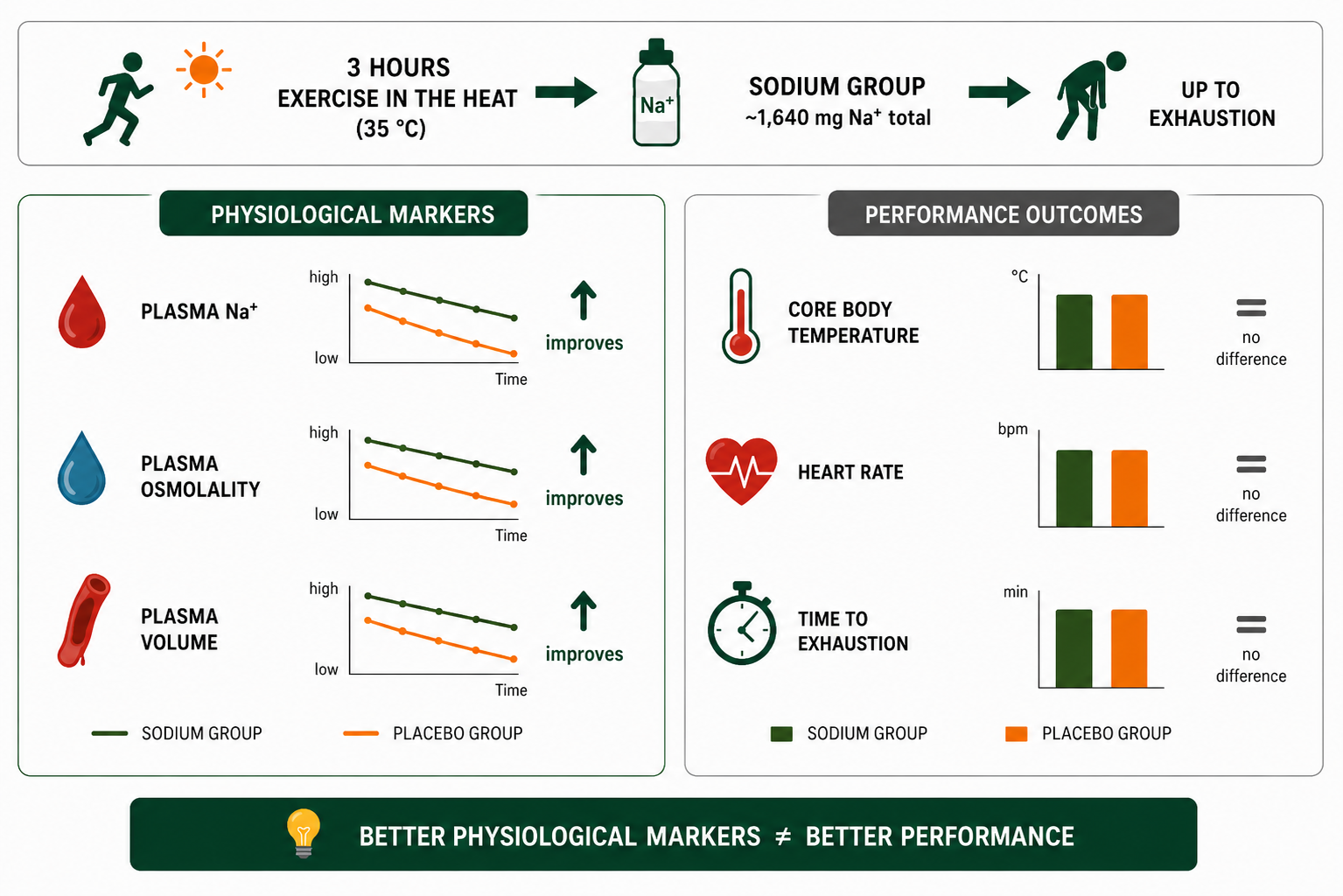
A study in which participants cycled for 3 hours in the heat (34 °C) reached similar conclusions (15). The sodium group showed clearly better physiological values (sodium concentration, blood plasma), but this did not result in any improvement in performance. It is important to note, however, that one participant in the experiment had to drop out due to hyponatremia (clinically low sodium levels in the blood). This tells us two things:
- Not everyone necessarily needs to consume sodium during a 3-hour workout.
- However, if someone sweats a lot and loses a lot of sodium, and temperatures are high, then it makes sense for such individuals to consume extra sodium.
At this point, it is important to once again highlight the significant fluctuations in sodium loss. The participant who had to stop the three-hour cycling test most likely had above-average sodium excretion and, at the same time, consumed a lot of water, which further reduced the sodium concentration—to the point where it could become clinically dangerous.
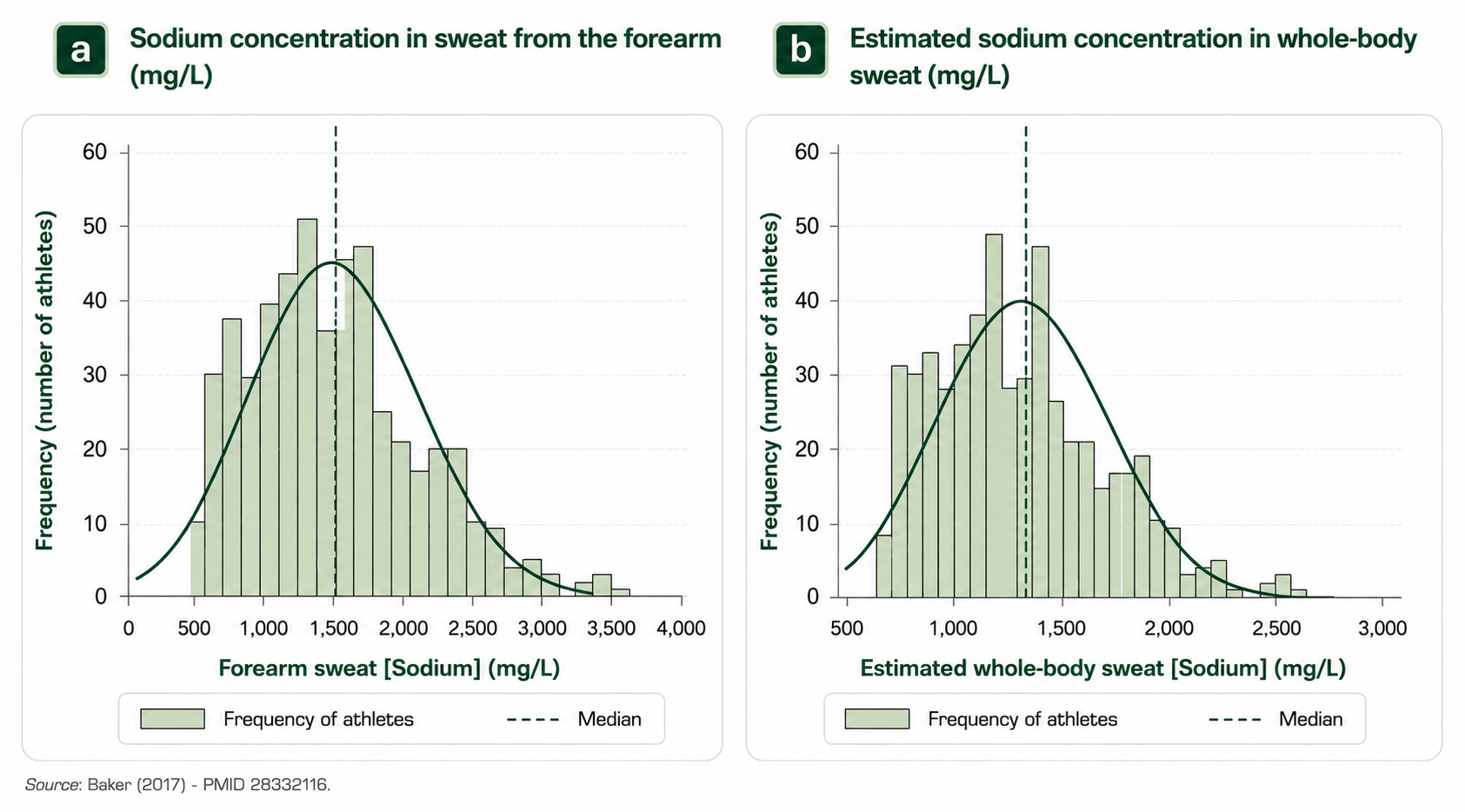
An analysis of more than 500 athletes who underwent testing (16) illustrates just how much sodium loss can vary from person to person: The predicted sodium loss for the entire body ranges from ~230 to ~1,610 mg/L—a 7-fold range in concentration alone. Two athletes can run side by side during the same training session and still experience completely different sodium losses. This is precisely why blanket product recommendations fall short—an individually tailored sodium strategy, based on a prior sweat test, is the scientifically sounder approach.
Shifts of 4 hours or more: It’s not just about performance—it’s also about safety
After 4 hours, the central question shifts: It is no longer just a matter of whether sodium improves performance—but whether a lack of it can be dangerous. At the same time, this is the only duration of exercise for which the evidence actually shows a performance benefit.
A 2003 study (17) provides alarming figures on this topic: 92% of female athletes in the water group developed hyponatremia after a 4-hour run —despite moderate temperatures (5–19 °C). As sodium intake increased, this rate decreased in a dose-dependent manner to 69% and 46%, respectively. The sharpest drops in sodium levels occurred among female athletes who drank a lot but lost little sodium at the same time. Sodium alone does not provide protection unless fluid intake is adjusted accordingly. The ratio is important, not generalized amounts. A study (18) conducted during an Ironman event confirmed this: sodium tablets had no effect on the incidence of hyponatremia unless excessive fluid intake was reduced.Anyone engaging in very long endurance events should have their sodium loss measured and follow a personalized strategy.
The clearest evidence to date comes from a study by Del Coso et al. (2016) involving triathletes (19). During a Half-Ironman race (~4.5–6 h), triathletes were given either 3.6 g of sodium or a placebo. The sodium group lost less body mass (1.8% vs. 2.5%) and ran the final 21-km segment significantly faster.
Recommendation for ≥4 hours: 500–1,200 mg Na/h, adjusted individually. Base fluid intake on sweat loss—weight gain during exercise is a warning sign. A sweat test is recommended for precise dosing.
Overview of Recommended Sodium Intake Levels Based on Exercise Duration
| Exercise Duration | Sodium Recommendation | Rationale |
|---|---|---|
| < 120 min any conditions |
No sodium needed Water sufficient Carbohydrates optional depending on intensity |
Sweat and sodium losses too low to meaningfully affect plasma Na⁺ or plasma volume. No study demonstrates a performance benefit from sodium at this duration. |
| 2–2.5 h cool conditions (< 27 °C) |
No sodium needed Water + sodium-containing meal before/after |
Cardiovascular drift increases from 2h onwards, but high-dose sodium (1,800 mg total) showed no difference in performance or heart rate response vs. placebo in a controlled trial. |
| 2–2.5 h heat (> 27 °C) + high sweat rate |
Consider individually 400–700 mg Na/h Not mandatory – context-dependent |
The physiological rationale grows with temperature and sweat rate. Direct evidence for a performance benefit is lacking – reasonable for athletes with high individual sodium losses. |
| ~3 h any conditions |
Recommended – Safety 300–600 mg Na/h Primarily for hyponatraemia prevention |
Sodium improves plasma volume but not performance – shown by two independent studies at this duration. In a heat study at 3h, one subject had to withdraw due to hyponatraemia in the water group. Safety is the primary concern. |
| ≥ 4 h Marathon, Half-Ironman, Ultra |
Clearly recommended 500–1,200 mg Na/h Individually adjusted; sweat test recommended |
Hyponatraemia rates of up to 92% in water groups after 4h exercise documented. Sodium tablets without fluid intake adjustment are ineffective. Only exercise duration with clearly documented performance benefit from sodium supplementation (Half-Ironman study). |
Reference values based on cited primary literature. Not a substitute for individual nutritional counselling.
Who should consume electrolytes?
Whether sodium supplements are beneficial does not depend on the type of sport, but rather on four physiological factors: duration of exercise, sweat rate, individual sweat sodium concentration, and the time until the next exercise session.
For most training — strength work, CrossFit under 90 min, team sports with breaks, or recreational sessions under 2 hours below 25°C — the evidence doesn’t support routinely adding sodium. Especially if a normal meal follows straight after training.
Targeted sodium intake is worth considering for: endurance sessions of 2–3+ hours, especially above 25°C; high-intensity training in heat over 30°C; sweat rates over 1 L/h lasting more than 90 min; and multiple sessions in one day or short turnarounds between events (under 4–6 hours).
Worth considering when: endurance sessions run 2-3+ hours (especially above 25°C), you’re training hard in heat over 30°C, your sweat rate tops 1 L/h for more than 90 min, or you’ve got multiple sessions in a day or short recovery windows (under 4-6h) between events.
Myth Check – Frequently Asked Questions
Do I need electrolytes after every workout?
No. For exercise lasting up to 90 minutes under moderate conditions, water and a normal meal are sufficient. A targeted sodium intake becomes relevant only during prolonged exercise, high sweat rates, hot weather, or short recovery intervals (20).
Does every athlete need electrolytes?
No—at least not as a supplement. The key factors are exercise duration, sweat rate, and temperature. Anyone who exercises for less than 2 hours under moderate conditions and then eats a normal meal will fully meet their sodium needs through their diet (20).
What makes a good electrolyte product?
Essentially, it’s the sodium content. The amounts of magnesium and potassium lost in sweat are too small to have an acute effect on hydration. A suitable exercise drink contains 400–900 mg Na/L, while a rehydration drink contains ~1,000–1,500 mg/L (21, 22).
The more sodium, the better?
No. At concentrations of ~1,200 mg/L or higher, no additional hydration benefit is measurable. Excessive amounts of sodium can also cause gastrointestinal distress—which is a practical concern during long competitions (9).
Are electrolyte tablets better than sports drinks?
The form of administration is secondary. What matters is the total amount of sodium consumed. Capsules allow for more precise dosing regardless of carbohydrate intake—which is useful for athletes who want to separate or reduce their calorie intake.
Do electrolytes help with cramps?
The evidence is weak. Exercise-induced cramps have multiple causes—neuromuscular fatigue and individual predisposition likely play a greater role than electrolyte deficiencies. Sodium deficiency alone does not explain most exercise-related cramps (23).
Can I prevent hyponatremia with sodium tablets?
Not entirely. Exercise-associated hyponatremia is primarily caused by overhydration, not by a lack of salt. Sodium tablets alone—without adjusting fluid intake—had no effect on the incidence of hyponatremia during the Ironman. The most important preventive measure: base fluid intake on sweat loss and avoid weight gain during exercise. (24, 25)
How can I find out if I’m a “Salty Sweater”?
Signs: distinct white salt stains on clothing and helmet, salty-tasting sweat, burning eyes. Only a standardized sweat test can confirm this. At levels of ~1,500 mg Na/L in sweat or higher, higher sodium intake may be advisable for some individuals during prolonged exercise (2).
What should the sodium concentration be in my rehydration drink?
For rehydration following significant dehydration: ~1,000–1,500 mg Na/L. During prolonged exercise: 400–900 mg/L. The optimal concentration depends on individual sweat sodium levels and fluid intake (26).
| Claim | Evidence Rating | Verdict |
|---|---|---|
| Every athlete needs electrolytes | Disproved for short exercise | Only beneficial during long exercise, in heat, or with high losses |
| Electrolytes always improve performance | Not confirmed | Physiological effects ≠ performance effects. Only well-documented at >4 h |
| Sodium is the most important electrolyte | Clearly confirmed | Primary extracellular osmolyte, dominant sweat component |
| More sodium is always better | Not confirmed | Optimum at ~1,000–1,500 mg/L for rehydration; higher amounts provide no additional benefit |
| Magnesium belongs in every electrolyte drink | Not supported | Sweat losses minimal; no documented hydration benefit |
| Electrolytes prevent muscle cramps | Weak / unclear | Multifactorial cause; sodium deficiency is not the primary driver |
| Hyponatraemia = salt deficiency | Disproved | Primarily caused by overdrinking; prevention through appropriate fluid intake |
| Water hydrates poorly | Context-dependent | After >2 h with high losses: water suboptimal. For shorter exercise: sufficient |
| Salty Sweaters need more sodium | Confirmed | Individual adjustment of sodium intake is physiologically justified |
Ratings based on primary literature cited in this article.
Generalizations like “Electrolytes are necessary for rehydration” or, conversely, claims that “Electrolytes aren’t important at all”—don’t help! This remains a topic where nuances and context are crucial, and where intake recommendations must truly be tailored to the individual athlete’s specific fluid loss.
Summary
- Sodium is the most important electrolyte for regulating fluid balance during and after exercise
- The longer and more strenuous the exercise, the more important it is to ensure an adequate intake of sodium
- Sodium primarily improves fluid retention and helps restore plasma volume.
- Sodium intake only becomes truly important after 2.5 hours in high temperatures or 3 hours in cooler temperatures
- Ideally, sodium intake should be adjusted individually based on sweat rate and sodium loss
- Although potassium and magnesium are electrolytes that perform important functions, they play only a minor role in acute hydration because they are lost only in very small amounts
🎧 Podcast Tip: In Episode #78 of our athlEATradio podcast, you can listen to all the information again in audio format.


0 Comments